
Introduction
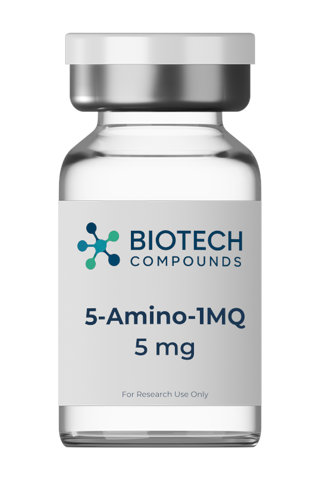
5-Amino-1MQ research has gained significant attention in recent years due to its potential as a tool for investigating cellular metabolism and cancer biology. As a selective inhibitor of nicotinamide N-methyltransferase (NNMT), this synthetic small-molecule compound provides researchers with a unique opportunity to study metabolic pathways and their role in cancer cell survival and death. 5-Amino-1MQ research's ability to modulate cellular energy production makes it particularly valuable for cancer apoptosis studies, where understanding metabolic dysfunction is crucial for developing therapeutic strategies.
NNMT represents a critical enzyme in cellular metabolism, catalyzing the N-methylation of nicotinamide and other compounds. Cancer cells often exhibit altered NNMT expression, which can impact their energy metabolism and resistance to apoptosis. By utilizing 5-Amino-1MQ as an NNMT inhibitor, researchers can investigate how metabolic reprogramming affects cancer cell behavior and survival mechanisms.
5-Amino-1MQ Research Mechanism of Action
The mechanism by which 5-Amino-1MQ research contributes to our understanding of cancer biology centers on its selective inhibition of NNMT. When cancer cells are treated with 5-Amino-1MQ research, NNMT activity becomes significantly reduced, leading to alterations in NAD+ metabolism and cellular energy production. These metabolic changes can trigger various cellular responses, including the activation of apoptotic pathways.
NNMT inhibition affects the methylation cycle and cellular methylation potential, which are fundamental processes in cancer cell metabolism. Cancer cells frequently rely on altered methylation patterns for their survival and proliferation. By blocking NNMT activity, 5-Amino-1MQ disrupts these patterns and can sensitize cancer cells to apoptosis [1]. 5-Amino-1MQ research's effects on cellular energy metabolism create conditions that may promote programmed cell death in cancer cells while potentially sparing healthy cells with different metabolic profiles.
Research has demonstrated that NNMT inhibition can lead to increased levels of nicotinamide, which subsequently affects sirtuin activity and cellular stress responses. These molecular events create a cascade that can ultimately result in cancer cell apoptosis, making 5-Amino-1MQ research particularly valuable for understanding how metabolic interventions might be used therapeutically.
Research Findings in Cancer Cell Studies
Multiple laboratory studies have utilized 5-Amino-1MQ research to investigate its effects on various cancer cell lines. Researchers have observed that treatment with this NNMT inhibitor can induce apoptosis in certain cancer cell types, particularly those with elevated NNMT expression. Breast cancer cells, for example, have shown increased susceptibility to apoptosis when exposed to 5-Amino-1MQ, with researchers documenting significant increases in apoptotic markers such as caspase-3 activation and DNA fragmentation [2].
Hepatocellular carcinoma research has also benefited from 5-Amino-1MQ studies. Cancer cells derived from liver tumors frequently exhibit high NNMT expression, which correlates with poor prognosis. Laboratory investigations have shown that NNMT inhibition with 5-Amino-1MQ can reduce cell viability and promote apoptosis in hepatocellular carcinoma cell lines. These findings suggest that targeting NNMT might represent a viable strategy for addressing liver cancer metabolism.
Glioblastoma research has incorporated 5-Amino-1MQ to study brain tumor metabolism and apoptosis resistance. Brain cancer cells often display remarkable resistance to conventional apoptosis-inducing treatments, partly due to their unique metabolic characteristics. Studies using 5-Amino-1MQ have revealed that NNMT inhibition can overcome some of this resistance by disrupting key metabolic pathways that cancer cells depend on for survival [3].
Applications in Metabolic Research
Beyond cancer-specific applications, 5-Amino-1MQ research extends to broader metabolic studies that inform our understanding of cellular energy regulation. Researchers investigating mitochondrial function utilize 5-Amino-1MQ research to study how NNMT inhibition affects oxidative phosphorylation and ATP production. These studies have revealed complex relationships between NNMT activity and mitochondrial efficiency, providing insights into how metabolic dysfunction contributes to disease progression.
Cellular aging research has incorporated 5-Amino-1MQ to investigate how NNMT activity changes over time and contributes to age-related metabolic dysfunction. By comparing young and aged cell cultures treated with this NNMT inhibitor, researchers can better understand how metabolic pathways evolve with cellular aging and how these changes might be modulated therapeutically.
Autophagy research represents another important application area for 5-Amino-1MQ studies. Autophagy and apoptosis share complex regulatory relationships, and NNMT inhibition can influence both processes. Researchers use 5-Amino-1MQ to investigate how metabolic stress affects the balance between autophagy and apoptosis, particularly in cancer cells that may use autophagy as a survival mechanism during metabolic stress.
Experimental Protocols and Considerations
When conducting 5-Amino-1MQ research, several important experimental considerations must be addressed to ensure reliable results. 5-Amino-1MQ research is typically provided as a lyophilized powder that requires reconstitution in appropriate solvents before use. Researchers commonly dissolve 5-Amino-1MQ in dimethyl sulfoxide (DMSO) to create stock solutions, which are then diluted to working concentrations for cell culture experiments.
Dosage optimization represents a critical aspect of experimental design in 5-Amino-1MQ research. Different cancer cell lines exhibit varying sensitivity to NNMT inhibition, requiring researchers to conduct dose-response studies to identify optimal concentrations. Typical working concentrations range from micromolar to low millimolar levels, depending on the specific cell type and experimental endpoints being measured.
Time course studies are essential for understanding the temporal aspects of 5-Amino-1MQ effects on cancer cell apoptosis. Early metabolic changes may occur within hours of treatment, while apoptotic markers typically become apparent after 24-48 hours. Researchers must carefully plan their experimental timelines to capture both immediate metabolic effects and longer-term apoptotic responses.
Control experiments remain crucial for interpreting 5-Amino-1MQ research results. Vehicle controls using DMSO at equivalent concentrations help distinguish compound-specific effects from solvent-related artifacts. Additionally, positive controls using known apoptosis inducers provide reference points for comparing the magnitude of 5-Amino-1MQ effects on cancer cell death.
Future Research Directions
The expanding field of 5-Amino-1MQ research continues to reveal new applications and research opportunities. Combination therapy studies represent a promising direction, where researchers investigate how NNMT inhibition might enhance the effectiveness of existing cancer treatments. Preliminary studies suggest that 5-Amino-1MQ may sensitize cancer cells to chemotherapy drugs and radiation therapy, potentially improving treatment outcomes.
Personalized medicine approaches are beginning to incorporate NNMT expression profiling to identify patients who might benefit most from NNMT-targeted interventions. Researchers are developing methods to assess NNMT levels in patient samples and correlate these measurements with treatment responses, laying the groundwork for precision medicine applications.
Drug resistance research increasingly utilizes 5-Amino-1MQ to understand how cancer cells develop resistance to metabolic interventions. By studying the adaptive responses of cancer cells to chronic NNMT inhibition, researchers can identify potential combination strategies that prevent or overcome resistance development [4].
Conclusion
5-Amino-1MQ research has established itself as a valuable tool for investigating cancer cell metabolism and apoptosis mechanisms. 5-Amino-1MQ research's selective inhibition of NNMT provides researchers with unique opportunities to study how metabolic dysfunction contributes to cancer progression and treatment resistance. From basic mechanistic studies to therapeutic development applications, 5-Amino-1MQ continues to contribute to our understanding of cancer biology and potential treatment strategies. Researchers interested in exploring metabolic approaches to cancer research can explore 5-Amino-1MQ as a research tool for their investigations into cellular energy regulation and apoptosis mechanisms. Learn more about 5-Amino-1MQ research.