
Introduction
Sleep research continues to evolve beyond traditional compounds, with DSIP emerging as a notable alternative to melatonin for laboratory studies. Delta Sleep-Inducing Peptide (DSIP) represents a fundamentally different approach to understanding sleep mechanisms compared to the widely studied hormone melatonin. First characterized in 1977 from rabbit brain tissue extracts, DSIP offers researchers a synthetic nonapeptide with the sequence Trp-Ala-Gly-Gly-Asp-Ala-Ser-Gly-Glu that operates through distinct pathways.[1]
While melatonin primarily functions as a circadian rhythm regulator through melatonin receptors, DSIP demonstrates unique properties that extend beyond simple sleep induction. DSIP alternative to melatonin's structure, containing a high proportion of small neutral amino acids with tryptophan at the N-terminus and glutamic acid at the C-terminus, creates a net negative charge that contributes to its distinctive biological activity. Researchers investigating sleep mechanisms may find DSIP provides complementary insights that melatonin studies cannot offer.
DSIP Alternative to Melatonin Mechanism Comparison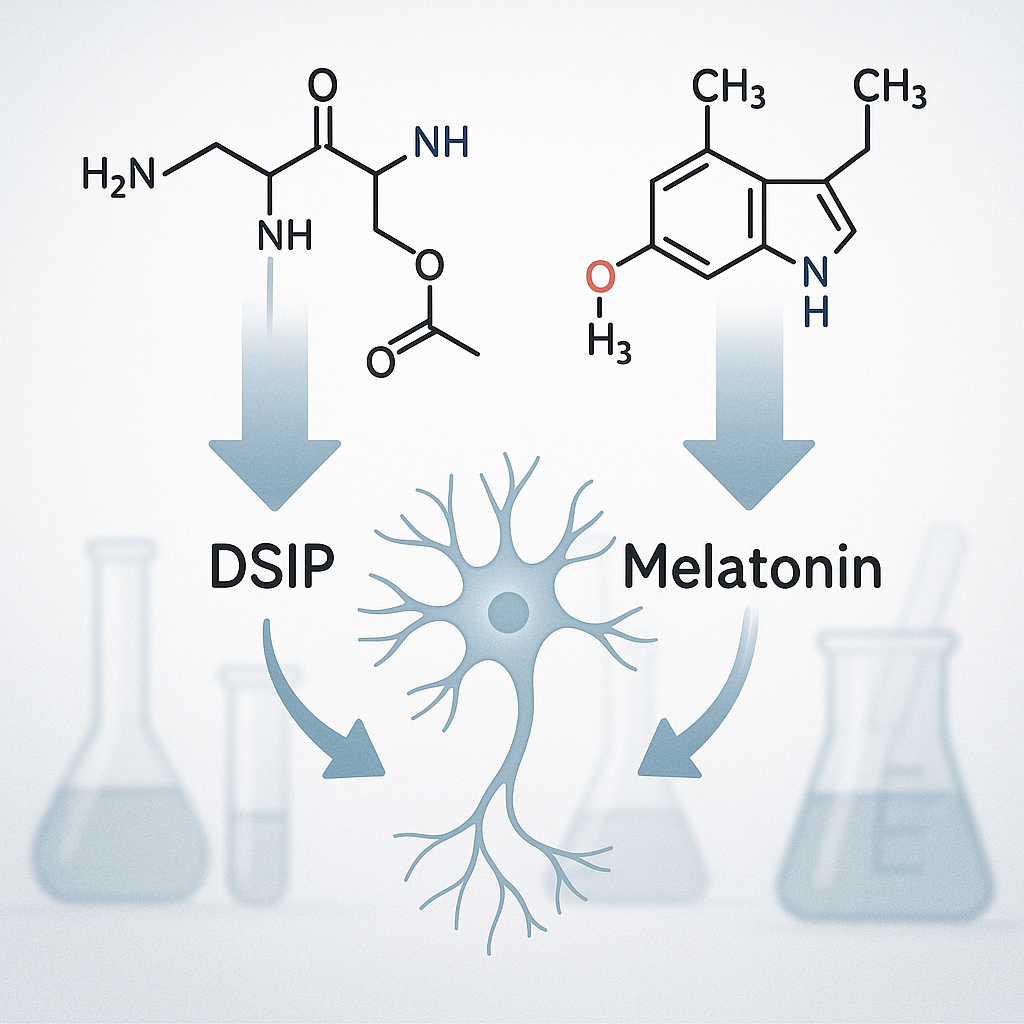
DSIP Alternative to Melatonin Mechanism Comparison
Research on stress response suggests that Research on delta sleep inducing peptide suggests that The fundamental differences between DSIP and melatonin mechanisms provide researchers with diverse experimental approaches. Melatonin operates primarily through MT1 and MT2 receptors, influencing circadian rhythms and sleep timing through well-characterized hormonal pathways. In contrast, DSIP appears to work through multiple mechanisms that remain under investigation, including potential interactions with neurotransmitter systems and direct effects on sleep architecture.[2]
Research indicates that DSIP may influence sleep through modulation of various neurotransmitter systems, including GABA, dopamine, and serotonin pathways. These mechanisms differ significantly from melatonin's receptor-mediated approach, potentially offering researchers access to different aspects of sleep regulation. DSIP alternative to melatonin's ability to cross the blood-brain barrier efficiently, despite its hydrophilic nature, suggests specialized transport mechanisms that warrant further investigation.
Laboratory studies have demonstrated that DSIP's effects on sleep parameters may be more complex than melatonin's primarily sleep-promoting actions. While melatonin typically shows dose-dependent effects on sleep latency and duration, DSIP research suggests potential bidirectional effects depending on experimental conditions, dosing, and timing of administration. These characteristics make DSIP an intriguing alternative for researchers seeking to explore different dimensions of sleep physiology.
Research Findings and Comparative Studies
Scientific literature comparing DSIP to melatonin remains limited, but existing studies highlight distinct profiles between these compounds. Early research demonstrated that DSIP could induce sleep-like states in laboratory animals through mechanisms independent of circadian rhythm entrainment, contrasting with melatonin's primary function as a circadian regulator.[3] These findings suggest that DSIP may offer researchers tools for investigating sleep processes separate from circadian influences.
Electrophysiological studies have shown that DSIP administration can alter sleep architecture differently than melatonin. While melatonin typically affects sleep onset and maintenance through circadian mechanisms, DSIP appears to influence specific sleep stages, particularly slow-wave sleep patterns. Research indicates potential effects on:
- Delta wave activity during deep sleep phases
- REM sleep regulation independent of circadian timing
- Sleep consolidation through non-hormonal mechanisms
- Recovery sleep following sleep deprivation
Pharmacokinetic studies reveal another key difference between DSIP and melatonin. Melatonin demonstrates rapid absorption and metabolism, with effects typically lasting several hours. DSIP research suggests more complex pharmacokinetics, with potential for both acute and sustained effects that may persist beyond DSIP alternative to melatonin's apparent half-life. These characteristics provide researchers with different experimental windows and dosing considerations compared to melatonin studies.
Applications in Sleep Research
Researchers exploring alternatives to melatonin may find DSIP particularly valuable for specific experimental applications. DSIP alternative to melatonin's unique mechanism profile makes it suitable for studies investigating sleep processes independent of circadian rhythm regulation. Unlike melatonin, which primarily addresses sleep timing and circadian alignment, DSIP research may illuminate fundamental sleep drive mechanisms and sleep architecture regulation.[4]
Laboratory applications where DSIP serves as an effective alternative to melatonin include:
- Sleep deprivation recovery studies: DSIP's potential effects on homeostatic sleep drive may provide insights unavailable through melatonin research
- Neurotransmitter interaction investigations: DSIP alternative to melatonin's multi-system approach offers broader mechanistic exploration than melatonin's receptor-specific actions
- Sleep architecture analysis: DSIP's effects on specific sleep stages may reveal regulatory mechanisms distinct from circadian influences
- Stress-sleep interaction studies: Research suggests DSIP may have stress-modulating properties that complement its sleep effects
The synthetic nature of research-grade DSIP provides experimental advantages over melatonin in certain contexts. DSIP alternative to melatonin's stability when properly stored and its consistent batch-to-batch composition make it suitable for long-term research projects requiring reliable compound characteristics. Additionally, DSIP's distinct molecular structure allows for easier tracking and analysis in biological systems compared to endogenous compounds like melatonin.
Experimental Considerations and Protocols
Experimental Considerations and Protocols
Implementing DSIP as an alternative to melatonin requires specific experimental considerations. DSIP alternative to melatonin's solubility in sterile water or bacteriostatic water provides flexibility in preparation methods, while storage requirements at -20°C with protection from light and moisture ensure compound stability throughout research studies. These storage conditions differ from melatonin's requirements and may offer advantages in certain laboratory settings.
Dosing considerations for DSIP research protocols vary significantly from established melatonin approaches. While melatonin studies often employ standardized dosing based on circadian timing, DSIP research suggests more complex dose-response relationships that may require individual experimental optimization. Researchers should consider factors including:
- Timing of administration relative to natural sleep cycles
- Duration of treatment protocols
- Individual response variability
- Potential interaction with other research compounds
DSIP alternative to melatonin's unique pharmacological profile means that direct protocol translation from melatonin studies may not be appropriate. Researchers should develop DSIP-specific methodologies based on DSIP alternative to melatonin's distinct mechanisms and effects. Pilot studies comparing DSIP to melatonin within the same experimental framework can help establish optimal parameters for specific research objectives.
Safety and Laboratory Considerations
Laboratory safety protocols for DSIP research differ from those required for melatonin studies. As a synthetic peptide, DSIP requires handling procedures appropriate for research compounds, including proper ventilation, personal protective equipment, and waste disposal protocols. DSIP alternative to melatonin's peptide nature makes it generally stable under appropriate storage conditions but susceptible to degradation under improper handling.[5]
Quality considerations for DSIP research include verification of peptide purity and sequence accuracy, factors that may be less critical in melatonin studies using well-characterized hormone preparations. Researchers should establish protocols for:
- Compound verification upon receipt
- Proper reconstitution and aliquoting procedures
- Storage monitoring and stability assessment
- Contamination prevention during handling
The research-only nature of DSIP requires strict adherence to laboratory protocols and institutional guidelines. Unlike melatonin, which has established safety profiles in various applications, DSIP remains strictly a research compound requiring appropriate institutional oversight and safety protocols.
Future Research Directions
The potential for DSIP as an alternative to melatonin extends beyond current research applications. Emerging studies suggest that DSIP alternative to melatonin's multi-system approach to sleep regulation may reveal novel therapeutic targets and mechanisms. Future research directions may include investigation of DSIP's interactions with other sleep-regulating compounds, exploration of its potential in combination therapies, and development of modified peptide analogues with enhanced specificity.
Comparative studies directly examining DSIP versus melatonin effects in identical experimental conditions remain needed to fully characterize the differences between these approaches. Such research could establish clear guidelines for when each compound offers optimal experimental utility and may reveal synergistic effects when used in combination protocols.
The synthetic nature of DSIP also presents opportunities for structure-activity relationship studies that could enhance understanding of sleep regulation mechanisms. Modifications to the nonapeptide sequence might yield compounds with improved specificity, duration of action, or reduced side effects, potentially offering even more refined alternatives to traditional sleep research tools like melatonin.
Conclusion
DSIP represents a compelling alternative to melatonin for sleep research applications, offering distinct mechanisms and experimental possibilities that complement traditional approaches. DSIP alternative to melatonin's unique nonapeptide structure and multi-system effects provide researchers with tools for investigating sleep processes beyond circadian regulation. While melatonin remains valuable for circadian rhythm studies, DSIP's alternative mechanisms may unlock new insights into fundamental sleep physiology and regulation. Researchers interested in expanding their sleep research methodologies beyond conventional approaches should consider the unique properties and experimental opportunities that DSIP provides. To explore DSIP for your research applications, consider its potential as a valuable addition to your laboratory's sleep research capabilities. Learn more about DSIP research.