
Introduction
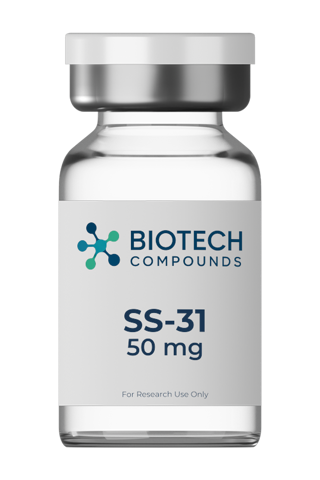
SS-31 mitochondrial optimization has emerged as a promising research avenue for addressing cellular energy dysfunction and age-related decline. Known scientifically as Elamipretide and formerly designated as Bendavia or MTP-131, this synthetic tetrapeptide belongs to the Szeto-Schiller peptide family, characterized by alternating aromatic and basic residues that confer unique mitochondrial targeting properties.
The tetrapeptide sequence D-Arg-2',6'-dimethyltyrosine(Dmt)-Lys-Phe-NH2 incorporates several structural modifications that enhance its biological activity. The presence of D-arginine and the non-natural amino acid 2',6'-dimethyltyrosine (Dmt), combined with C-terminal amidation, provides SS-31 with exceptional cell permeability and mitochondrial localization capabilities.
Mitochondrial dysfunction underlies numerous pathological conditions, from neurodegenerative diseases to cardiovascular disorders. Research into SS-31 has revealed its potential to address these fundamental cellular energy deficits through targeted optimization of mitochondrial function.
SS-31 Mitochondrial Optimization Mechanism of Action
The mechanism underlying SS-31 mitochondrial optimization centers on its selective interaction with cardiolipin, a unique phospholipid found exclusively in mitochondrial membranes. Cardiolipin comprises approximately 15-20% of total mitochondrial lipids and plays crucial roles in maintaining mitochondrial membrane structure and supporting optimal function of respiratory complexes.
SS-31 demonstrates remarkable selectivity for cardiolipin through electrostatic interactions between its positively charged residues and the negatively charged cardiolipin headgroups. This binding stabilizes cardiolipin-protein interactions and prevents cardiolipin peroxidation, a key factor in mitochondrial dysfunction [1].
SS-31 mitochondrial optimization's alternating cationic and aromatic residues create an amphiphilic structure that enables efficient membrane penetration without disrupting membrane integrity. Once localized to the inner mitochondrial membrane, SS-31 optimizes electron transport chain efficiency by maintaining proper cardiolipin organization around respiratory complexes, particularly Complex IV (cytochrome c oxidase).
Research has demonstrated that SS-31 treatment significantly improves mitochondrial respiration rates and ATP synthesis capacity. Studies using isolated mitochondria show up to 40% increases in oxygen consumption rates and enhanced respiratory control ratios, indicating improved coupling between electron transport and ATP production [2].
Research Findings on Mitochondrial Function Enhancement
Extensive preclinical research has validated SS-31's capacity for mitochondrial optimization across diverse experimental models. In cardiac ischemia-reperfusion studies, SS-31 treatment reduced infarct size by 35-50% compared to controls, with corresponding improvements in left ventricular function and reduced oxidative stress markers [3].
Neurological research has revealed significant neuroprotective effects of SS-31 mitochondrial optimization. In models of Huntington's disease, SS-31 treatment improved motor function scores by 60% and reduced striatal neurodegeneration. These benefits correlated with restored mitochondrial membrane potential and increased ATP levels in affected brain regions [4].
Age-related mitochondrial decline represents another important research focus. Studies in aged animals demonstrate that SS-31 treatment reverses age-associated decreases in mitochondrial respiratory capacity. Skeletal muscle biopsies from SS-31-treated aged subjects showed 25-30% improvements in mitochondrial oxidative capacity and reduced accumulation of oxidatively damaged proteins.
Renal protection studies have shown that SS-31 mitochondrial optimization preserves kidney function during acute kidney injury. Treated animals exhibited 70% reductions in serum creatinine levels and maintained normal glomerular filtration rates compared to untreated controls, with histological analysis revealing preserved mitochondrial ultrastructure in tubular epithelial cells [5].
Cardiolipin Interaction and Membrane Stability
The specific interaction between SS-31 and cardiolipin represents a unique approach to mitochondrial optimization that differs from conventional antioxidants or respiratory chain modulators. Cardiolipin's distinctive four-acyl chain structure makes it particularly susceptible to oxidative damage, and its peroxidation initiates a cascade of mitochondrial dysfunction.
Biophysical studies using model membranes have elucidated the molecular details of SS-31-cardiolipin binding. Surface plasmon resonance experiments demonstrate high-affinity binding with dissociation constants in the micromolar range, indicating strong but reversible interactions that allow dynamic regulation of cardiolipin function.
The protective effects of SS-31 mitochondrial optimization SS-31 on cardiolipin extend beyond simple antioxidant activity. SS-31 mitochondrial optimization maintains cardiolipin in its optimal conformation for supporting respiratory complex activity, preventing the conformational changes that occur during oxidative stress and aging. Mass spectrometry analysis shows that SS-31 treatment preserves native cardiolipin species composition and prevents the accumulation of oxidized cardiolipin products.
Electron microscopy studies reveal that SS-31 mitochondrial optimization maintains cristae structure and organization. Mitochondria from SS-31-treated cells exhibit well-organized cristae membranes with preserved contact sites between inner and outer membranes, structural features essential for optimal respiratory function.
Applications in Research
SS-31 mitochondrial optimization research spans multiple therapeutic areas, reflecting the central role of mitochondrial dysfunction in disease pathogenesis. Cardiovascular research represents a major application area, with studies examining SS-31's effects in heart failure, myocardial infarction, and diabetic cardiomyopathy models.
In heart failure research, SS-31 treatment has demonstrated significant improvements in cardiac contractile function and exercise tolerance. Echocardiographic measurements show improved ejection fraction and reduced left ventricular end-diastolic pressure in treated animals, with molecular analysis revealing enhanced mitochondrial biogenesis and improved calcium handling.
Neurodegeneration research has explored SS-31's potential in Alzheimer's disease, Parkinson's disease, and amyotrophic lateral sclerosis models. SS-31 mitochondrial optimization's ability to cross the blood-brain barrier and selectively target neuronal mitochondria makes it particularly valuable for central nervous system applications. Studies show preserved synaptic function and reduced neuroinflammation in SS-31-treated animals.
Ophthalmologic research has investigated SS-31 mitochondrial optimization for treating inherited mitochondrial diseases affecting vision. In Leber hereditary optic neuropathy models, SS-31 treatment preserved retinal ganglion cell viability and maintained visual function, suggesting potential applications for mitochondrial optic neuropathies.
Aging research represents an expanding application area, with studies examining SS-31's effects on age-related mitochondrial dysfunction. Research in naturally aged animals demonstrates that SS-31 treatment improves physical performance, cognitive function, and extends healthspan through mitochondrial optimization.
Considerations for Research Use
Researchers investigating SS-31 mitochondrial optimization should consider several important factors when designing experiments. SS-31 mitochondrial optimization's stability requires proper storage at -20°C in lyophilized form, with reconstitution in sterile water immediately before use to maintain biological activity.
Dosing considerations vary significantly depending on the experimental model and research objectives. In vitro studies typically employ concentrations ranging from 0.1 to 10 μM, while in vivo studies use doses from 0.1 to 5 mg/kg. SS-31 mitochondrial optimization's favorable pharmacokinetic profile allows for various administration routes, including intravenous, subcutaneous, and oral delivery.
Outcome measurements for SS-31 mitochondrial optimization studies should include both functional and molecular endpoints. Mitochondrial respiration assays using Clark-type oxygen electrodes or fluorescent oxygen sensors provide quantitative assessments of respiratory function. ATP measurements, mitochondrial membrane potential analysis, and oxidative stress markers offer complementary insights into mitochondrial status.
Temporal considerations are important for SS-31 research, as SS-31 mitochondrial optimization's effects on mitochondrial optimization may require sustained treatment to achieve maximal benefits. Acute studies may demonstrate immediate protective effects, while chronic studies reveal SS-31 mitochondrial optimization's capacity to promote mitochondrial biogenesis and long-term functional improvements.
Control groups should include both untreated controls and appropriate vehicle controls to distinguish specific SS-31 effects from non-specific treatment effects. Given SS-31 mitochondrial optimization's multiple mechanisms of action, researchers should consider measuring multiple endpoints to capture the full spectrum of mitochondrial optimization effects.
Conclusion
SS-31 mitochondrial optimization represents a promising research frontier for addressing cellular energy dysfunction across diverse pathological conditions. SS-31 mitochondrial optimization's unique mechanism of action through cardiolipin interaction and selective mitochondrial targeting offers advantages over conventional approaches to mitochondrial dysfunction.
Research findings demonstrate consistent benefits of SS-31 mitochondrial optimization SS-31 treatment across cardiovascular, neurological, renal, and aging models. These effects stem from SS-31 mitochondrial optimization's ability to optimize mitochondrial respiratory function, preserve membrane integrity, and protect against oxidative damage through targeted cardiolipin stabilization.
The growing body of preclinical evidence supporting SS-31's efficacy continues to expand our understanding of mitochondrial optimization strategies. Researchers seeking to investigate mitochondrial function and dysfunction will find SS-31 to be a valuable research tool with well-characterized mechanisms and reproducible effects. Explore SS-31 for your mitochondrial optimization research and contribute to advancing our understanding of cellular energy metabolism. Learn more about SS-31 research.