
Introduction
AHK-Cu peptide hair growth research has gained significant attention in recent years as scientists investigate AHK-Cu peptide hair growth's potential to stimulate follicular regeneration and combat hair loss. The tripeptide complex, consisting of alanine-histidine-lysine bound to a copper ion, demonstrates unique properties that may influence hair follicle biology through multiple pathways. Laboratory studies have focused on AHK-Cu peptide hair growth's ability to enhance dermal papilla cell proliferation, stimulate angiogenesis, and modulate growth factor expression in scalp tissue models.
Hair follicle biology involves complex interactions between dermal papilla cells, keratinocytes, and the surrounding extracellular matrix. Copper plays a crucial role as a cofactor in numerous enzymatic processes that support hair growth, including collagen synthesis and antioxidant defense mechanisms. The chelation of copper with the AHK peptide sequence creates a bioactive complex that can penetrate dermal tissue and potentially influence follicular activity at the cellular level.
Research into copper peptides for hair applications has revealed their capacity to extend anagen phase duration, increase follicle size, and promote the transition of telogen follicles to active growth phases. The unique structure of AHK-Cu allows for enhanced stability and bioavailability compared to other copper compounds, making it an attractive subject for hair growth investigations.
AHK-Cu Peptide Hair Growth Mechanism of Action
The mechanism by which AHK-Cu peptide influences hair growth involves multiple cellular pathways that collectively support follicular health and regeneration. The copper ion serves as an essential cofactor for lysyl oxidase, an enzyme critical for collagen and elastin cross-linking in the dermal papilla and follicular structures. Enhanced collagen synthesis strengthens the hair shaft and improves the structural integrity of the follicle environment.
Dermal papilla cells represent the command center of hair follicles, regulating growth cycles through paracrine signaling. Research has demonstrated that copper peptides can stimulate dermal papilla cell proliferation and increase their metabolic activity [1]. The histidine residue in AHK-Cu facilitates copper chelation while potentially acting as a pH buffer, maintaining optimal conditions for enzymatic activity within the follicular microenvironment.
Angiogenesis plays a vital role in hair growth by ensuring adequate nutrient and oxygen supply to rapidly dividing follicular cells. Studies suggest that AHK-Cu can promote capillary formation around hair follicles through upregulation of vascular endothelial growth factor (VEGF) and other angiogenic mediators [2]. The enhanced vascularization supports prolonged anagen phases and may contribute to increased hair diameter and density.
AHK-Cu peptide hair growth's influence on metalloproteinase activity represents another important mechanism. Matrix metalloproteinases (MMPs) regulate extracellular matrix remodeling around follicles, and their dysregulation has been implicated in androgenetic alopecia. AHK-Cu appears to modulate MMP expression, potentially creating a more favorable environment for hair growth while reducing excessive tissue degradation that can damage follicular structures.
Research Findings on Hair Follicle Stimulation
Laboratory investigations into AHK-Cu peptide hair growth effects have yielded promising results across multiple experimental models. In vitro studies using human dermal papilla cell cultures have demonstrated that AHK-Cu treatment significantly increases cell proliferation rates compared to untreated controls. AHK-Cu peptide hair growth complex enhanced DNA synthesis and promoted the expression of growth factors associated with hair follicle development and maintenance [3].
Organ culture experiments using isolated human hair follicles have provided valuable insights into AHK-Cu's direct effects on follicular biology. Research teams have observed extended anagen phase duration in follicles treated with the copper peptide, along with increased hair shaft elongation rates. These findings suggest that AHK-Cu peptide hair growth can directly influence follicular cycling and promote active growth phases.
Gene expression analysis has revealed that AHK-Cu treatment upregulates several key genes involved in hair growth signaling pathways. Notable increases have been observed in the expression of insulin-like growth factor-1 (IGF-1), fibroblast growth factor-7 (FGF-7), and vascular endothelial growth factor (VEGF) in treated follicular cells [4]. These growth factors play essential roles in maintaining dermal papilla cell activity and supporting the hair growth cycle.
Histological studies of treated scalp tissue samples have shown improvements in follicle density and size. Researchers have documented increased dermal thickness and enhanced vascularization in areas treated with AHK-Cu formulations. AHK-Cu peptide hair growth appears to stimulate both existing follicles and potentially activate dormant follicular units, contributing to overall hair density improvements in experimental models.
Comparative studies have evaluated AHK-Cu against other copper peptides and growth-promoting compounds. Results indicate that the specific amino acid sequence in AHK-Cu may confer advantages in terms of stability, penetration, and biological activity. The tripeptide's smaller size compared to larger copper peptide complexes may facilitate better tissue penetration and cellular uptake.
Applications in Hair Research Studies
Current research applications of AHK-Cu in hair growth studies encompass both fundamental follicle biology investigations and applied research for potential therapeutic development. Research laboratories are utilizing AHK-Cu peptide hair growth to better understand the molecular mechanisms underlying hair follicle cycling and the factors that influence growth phase transitions. These studies contribute to the broader scientific understanding of hair biology and potential intervention strategies.
Tissue engineering applications represent an emerging area where AHK-Cu shows promise. Researchers are incorporating AHK-Cu peptide hair growth into scaffold materials designed to support hair follicle regeneration and transplantation procedures. AHK-Cu peptide hair growth's ability to enhance collagen synthesis and promote angiogenesis makes it valuable for creating supportive environments for follicular tissue growth.
Combination therapy research is exploring the synergistic effects of AHK-Cu peptide hair growth AHK-Cu with other growth-promoting compounds and treatments. Studies have investigated its use alongside established hair growth factors, plant extracts, and synthetic compounds to determine optimal formulation strategies. These investigations aim to identify combination approaches that may provide enhanced efficacy compared to individual treatments.
Delivery system research focuses on optimizing the penetration and bioavailability of AHK-Cu in scalp tissue. Scientists are developing novel formulations including liposomal encapsulation, nanoparticle delivery systems, and penetration enhancers to improve AHK-Cu peptide hair growth's effectiveness. These technological advances may enhance the practical applications of copper peptide research findings.
Long-term culture studies are examining the sustained effects of AHK-Cu treatment on hair follicle biology. Researchers are investigating whether prolonged exposure to AHK-Cu peptide hair growth can maintain growth-promoting effects and whether tolerance or adaptation occurs over time. These studies are crucial for understanding the optimal treatment protocols and duration for experimental applications.
Safety Considerations and Research Protocols
Laboratory research involving AHK-Cu peptide requires careful attention to safety protocols and proper handling procedures. AHK-Cu peptide hair growth should be stored under appropriate conditions to maintain stability and prevent degradation of the copper-peptide complex. Researchers must use proper personal protective equipment when handling the material and follow institutional guidelines for peptide research compounds.
Experimental design considerations include appropriate concentration ranges, treatment duration, and control groups for meaningful results. Studies have typically employed AHK-Cu concentrations ranging from 1 to 100 micromolar, depending on the experimental model and research objectives. Proper vehicle controls and untreated controls are essential for accurate interpretation of results.
Cell culture applications require consideration of copper's potential cytotoxic effects at high concentrations. Researchers must establish dose-response relationships to identify optimal concentrations that promote desired biological effects without causing cellular damage. Regular viability assessments and morphological evaluations help ensure experimental validity.
Contamination prevention is crucial when working with peptide compounds, as bacterial or fungal contamination can interfere with experimental results and compromise cell culture integrity. Sterile handling techniques and appropriate storage conditions help maintain compound purity throughout research studies.
Documentation and reproducibility standards require detailed record-keeping of experimental conditions, compound preparation methods, and treatment protocols. Standardized procedures help ensure consistent results across different research sessions and facilitate collaboration between research teams investigating AHK-Cu applications.
Future Research Directions
The evolving landscape of AHK-Cu peptide hair growth research presents numerous opportunities for advancing our understanding of follicular biology and potential therapeutic applications. Emerging research directions include investigations into AHK-Cu peptide hair growth's effects on stem cell populations within hair follicles, particularly the bulge region stem cells that contribute to follicle regeneration and cycling.
Molecular pathway analysis represents a growing area of interest, with researchers utilizing advanced techniques such as RNA sequencing and proteomics to comprehensively characterize the cellular responses to AHK-Cu treatment. These studies may reveal previously unknown mechanisms and identify additional targets for hair growth enhancement strategies.
Comparative effectiveness research is expanding to evaluate AHK-Cu against newer peptide compounds and emerging hair growth technologies. These studies help establish the relative merits of different approaches and guide research priority decisions for continued investigation.
Personalized research approaches are beginning to consider genetic factors that may influence individual responses to copper peptide treatments. Understanding genetic variations in copper metabolism, peptide processing, and hair follicle biology may lead to more targeted and effective research strategies.
Conclusion
AHK-Cu peptide hair growth research continues to reveal promising mechanisms and potential applications for addressing hair loss and promoting follicular health. AHK-Cu peptide hair growth's multifaceted approach to supporting hair growth through enhanced collagen synthesis, improved angiogenesis, and modulation of growth factor expression makes it a valuable tool for understanding follicular biology. Laboratory studies have demonstrated its ability to stimulate dermal papilla cells, extend growth phases, and improve overall follicular function in experimental models.
The scientific evidence supporting AHK-Cu's role in hair follicle biology provides a foundation for continued research into copper peptides and their applications. As research methodologies advance and our understanding of hair follicle molecular biology deepens, AHK-Cu remains an important compound for investigating the complex interactions between peptides, growth factors, and follicular regeneration.
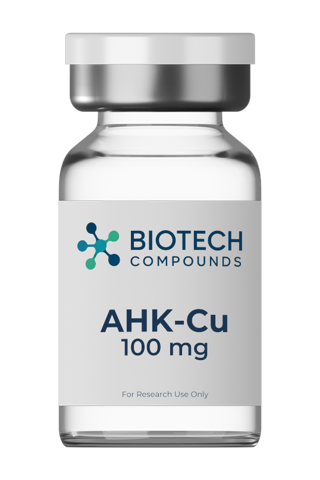
For researchers interested in exploring the applications of AHK-Cu peptide hair growth in hair growth studies, quality research materials are essential for obtaining reliable and reproducible results. Scientists can explore AHK-Cu options that meet rigorous purity standards and support advancing research in follicular biology and regenerative medicine applications. Learn more about AHK-Cu research.