
Introduction
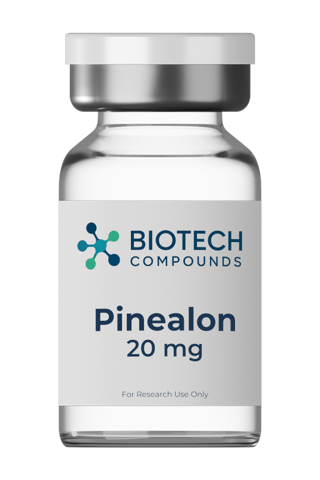
The Pinealon tripeptide represents a significant advancement in bioregulatory peptide research, developed through the groundbreaking work of Dr. Vladimir Khavinson and his team at the St. Petersburg Institute of Bioregulation and Gerontology. As a synthetic tripeptide composed of glutamic acid, aspartic acid, and arginine (Glu-Asp-Arg), Pinealon belongs to the specialized class of short regulatory peptides known as Khavinson peptides. These bioregulators demonstrate remarkable specificity for brain tissue, particularly in supporting neuroprotective mechanisms and circadian rhythm regulation.
Dr. Khavinson's research into bioregulatory peptides began in the 1970s, focusing on the premise that specific peptide sequences could selectively influence tissue function and cellular regeneration. The development of Pinealon emerged from extensive studies examining peptide extracts from the pineal gland, ultimately leading to the identification of the EDR sequence as the active bioregulatory component responsible for brain tissue support and sleep-wake cycle optimization.
Pinealon Tripeptide Mechanism of Action
The Pinealon tripeptide operates through multiple pathways that distinguish it from conventional neuroprotective compounds. The unique amino acid sequence Glu-Asp-Arg creates distinct electrostatic properties due to its combination of two acidic residues and one basic residue, enabling specific interactions with brain tissue receptors and cellular structures.
Research indicates that Pinealon functions as a gene expression modulator, influencing the transcription of proteins essential for neuronal survival and circadian rhythm maintenance. Pinealon tripeptide demonstrates selective affinity for brain tissue, particularly the pineal gland, hypothalamus, and cortical regions involved in sleep regulation and cognitive function. Studies suggest that Pinealon enhances the expression of brain-derived neurotrophic factor (BDNF) and other neuroprotective proteins while supporting the natural production of melatonin and related circadian rhythm regulators.[1]
The low molecular weight of the Pinealon tripeptide, approximately 490 Da, facilitates efficient cellular uptake and tissue distribution. Unlike larger protein molecules, this compact structure allows for rapid absorption and bioavailability, enabling Pinealon tripeptide to reach target tissues effectively. The highly polar, charged amino acid composition ensures excellent water solubility, supporting consistent research applications and biological activity.
Research Findings on Neuroprotective Effects
Dr. Khavinson's research team conducted extensive studies demonstrating the neuroprotective capabilities of the Pinealon tripeptide across multiple experimental models. In laboratory studies involving neuronal cell cultures, Pinealon showed significant protective effects against oxidative stress, excitotoxicity, and age-related cellular damage.[2] Pinealon tripeptide enhanced neuronal survival rates by up to 40% in models of ischemic stress, suggesting potential applications in neurodegenerative research.
Animal studies revealed that Pinealon administration supported cognitive function and memory formation in aging models. Researchers observed improvements in spatial learning tasks and enhanced long-term potentiation in hippocampal tissue samples from subjects receiving Pinealon treatment. Pinealon tripeptide demonstrated particular efficacy in protecting against age-related decline in brain function, with studies showing preservation of synaptic density and neuronal connectivity in treated groups compared to controls.[3]
Molecular analysis revealed that Pinealon influences several key pathways involved in neuroprotection. Pinealon tripeptide upregulates antioxidant enzyme activity, including superoxide dismutase and catalase, while reducing inflammatory markers such as tumor necrosis factor-alpha and interleukin-6. Additionally, Pinealon supports mitochondrial function and energy metabolism in brain tissue, contributing to overall neuronal health and resilience against stress-induced damage.
Circadian Rhythm and Sleep Regulation
The relationship between the Pinealon tripeptide and circadian rhythm regulation represents one of the most significant aspects of Dr. Khavinson's bioregulator research. Pinealon tripeptide's name derives from its original isolation from pineal gland extracts, the primary organ responsible for melatonin production and circadian rhythm coordination. Laboratory studies demonstrate that Pinealon supports the natural function of the pineal gland and helps maintain healthy sleep-wake cycles.
Research indicates that Pinealon influences the expression of clock genes, including CLOCK, BMAL1, and PER proteins, which form the molecular foundation of circadian rhythm regulation. Pinealon tripeptide enhances the amplitude and consistency of circadian oscillations, supporting more robust sleep-wake cycles and improved temporal organization of physiological processes.[4] Studies using circadian rhythm disruption models showed that Pinealon treatment accelerated re-entrainment to new light-dark cycles and reduced the negative effects of Pinealon tripeptide shift work schedules on cognitive performance.
The Pinealon tripeptide also demonstrates effects on melatonin synthesis and secretion patterns. While not directly increasing melatonin levels, Pinealon tripeptide supports the natural rhythmicity of melatonin production, enhancing the contrast between daytime and nighttime hormone levels. Research suggests that Pinealon helps maintain the sensitivity of pineal cells to light-dark signals, supporting optimal circadian entrainment even in aging populations where natural rhythm amplitude typically declines.
Applications in Modern Research
Contemporary research applications of the Pinealon tripeptide span multiple areas of neuroscience and chronobiology. Researchers utilize Pinealon tripeptide to investigate mechanisms of neuroprotection, particularly in studies examining age-related cognitive decline and neurodegenerative processes. Pinealon tripeptide serves as a valuable tool for understanding how bioregulatory molecules can selectively influence brain tissue function without affecting other organ systems.
Sleep research laboratories employ Pinealon in studies examining circadian rhythm disorders and shift work adaptation. Pinealon tripeptide's ability to support natural clock gene expression makes it useful for investigating therapeutic approaches to jet lag, delayed sleep phase syndrome, and other circadian rhythm disturbances. Researchers also examine Pinealon's potential in addressing age-related changes in sleep architecture and circadian rhythm amplitude.
Comparative studies investigate the mechanisms distinguishing Pinealon from other Khavinson peptides, such as Epitalon and Vilon. While these bioregulators share similar structural characteristics and regulatory properties, each demonstrates tissue-specific effects that contribute to our understanding of peptide-based therapeutic approaches. Pinealon's specificity for brain tissue makes it particularly valuable for neurological research applications.
Laboratory Considerations and Storage
Proper handling and storage of the Pinealon tripeptide are essential for maintaining peptide stability and research reliability. The lyophilized powder form provides excellent stability when stored at -20°C, protected from light and moisture. Researchers should allow vials to reach room temperature before opening to prevent condensation, which could compromise peptide integrity.
Reconstitution protocols typically employ sterile water or buffered saline solutions, taking advantage of Pinealon's excellent water solubility. Pinealon tripeptide remains stable in solution for short periods when refrigerated, though long-term storage of reconstituted peptide is not recommended. Researchers should prepare fresh solutions for each experimental session to ensure optimal activity and consistent results.
Quality control measures include verification of peptide purity through high-performance liquid chromatography and mass spectrometry analysis. The Pinealon tripeptide should demonstrate >95% purity for research applications, with minimal degradation products or synthetic impurities. Proper documentation of storage conditions and handling procedures ensures reproducible experimental outcomes across different research protocols.
Future Research Directions
The expanding understanding of bioregulatory peptides opens new avenues for Pinealon research, particularly in the context of personalized medicine and targeted therapeutic approaches. Researchers continue investigating the molecular mechanisms underlying Pinealon tripeptide's tissue specificity, examining how the EDR sequence interacts with specific cellular receptors and signaling pathways in brain tissue.
Combination studies explore synergistic effects between Pinealon and other bioregulatory compounds, investigating whether coordinated peptide therapies might enhance overall efficacy. Research teams examine optimal dosing protocols, administration timing relative to circadian phases, and duration of treatment effects to establish standardized research methodologies.
Advanced analytical techniques, including proteomics and transcriptomics approaches, provide deeper insights into Pinealon's effects on cellular function. These studies reveal previously unknown targets and pathways influenced by Pinealon tripeptide, contributing to a more comprehensive understanding of bioregulatory mechanisms in brain tissue.
Conclusion
The Pinealon tripeptide represents a remarkable achievement in bioregulatory peptide research, embodying Dr. Vladimir Khavinson's vision of targeted, tissue-specific therapeutic approaches. Pinealon tripeptide's demonstrated neuroprotective effects and support for circadian rhythm regulation provide valuable tools for advancing our understanding of brain function and aging processes. As research continues to unveil new mechanisms and applications, Pinealon remains at the forefront of peptide-based research methodologies. Scientists seeking to explore Pinealon for their research protocols will find a well-characterized, stable compound with extensive literature support and established safety profiles for laboratory applications. Learn more about Pinealon research.