
Introduction
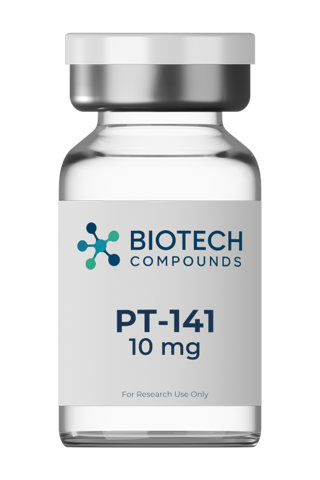
Research on sexual function suggests that Research on libido research suggests that PT-141 (bremelanotide) represents a fascinating example of targeted peptide pharmacology, with its PT-141 mechanism of action centered on selective melanocortin receptor activation. This synthetic cyclic heptapeptide, structurally defined as Ac-Nle-cyclo[Asp-His-D-Phe-Arg-Trp-Lys]-OH, operates through well-characterized molecular pathways that distinguish it from other research compounds. As a metabolite of Melanotan II formed through C-terminal cleavage, bremelanotide demonstrates unique binding properties and physiological effects that make it valuable for laboratory investigations.
PT-141 mechanism of action's distinctive structure features a lactam bridge cyclization between aspartic acid and lysine side chains, norleucine at position 1, and D-phenylalanine at position 4. These structural modifications contribute significantly to its receptor selectivity and biological activity profile. Researchers studying peptide pharmacology have identified PT-141's mechanism of action as primarily involving central nervous system pathways, distinguishing it from peripherally acting compounds.
PT-141 Mechanism of Action Through Melanocortin Receptors
Research on sexual function suggests that Research on libido research suggests that The PT-141 mechanism of action operates through selective agonism of melanocortin receptors, particularly MC1R, MC3R, MC4R, and MC5R subtypes. Among these targets, MC4R represents the primary pathway for many of bremelanotide's observed effects. The melanocortin system consists of five G-protein coupled receptors (GPCRs) that respond to endogenous melanocortins derived from pro-opiomelanocortin (POMC).
When PT-141 binds to melanocortin receptors, it initiates a cascade involving cyclic adenosine monophosphate (cAMP) as the primary second messenger. The receptor activation leads to stimulation of adenylyl cyclase, resulting in increased intracellular cAMP levels. This elevation triggers protein kinase A (PKA) activation, which subsequently phosphorylates various downstream targets including CREB (cAMP response element-binding protein).
The central nervous system distribution of melanocortin receptors, particularly MC4R in the hypothalamus and brainstem, explains many of PT-141's observed effects in research models. MC4R activation in the paraventricular nucleus of the hypothalamus influences various autonomic and neuroendocrine responses. PT-141 mechanism of action's ability to cross the blood-brain barrier, facilitated by its cyclic structure and molecular weight, enables direct central nervous system activity rather than relying on peripheral mechanisms.
Research has demonstrated that the PT-141 mechanism of action involves both rapid and delayed response pathways. Immediate effects occur through direct receptor activation and cAMP elevation, while longer-term responses involve transcriptional changes mediated by phosphorylated CREB and other transcription factors.
Receptor Selectivity and Binding Characteristics
Understanding the PT-141 mechanism of action requires examining its receptor selectivity profile across melanocortin receptor subtypes. Binding studies have revealed differential affinities for each receptor, with implications for PT-141 mechanism of action's overall activity profile. MC4R demonstrates high affinity for bremelanotide, while MC3R and MC1R show moderate binding characteristics.
The structural features that contribute to receptor selectivity include the D-phenylalanine residue at position 4, which enhances stability against enzymatic degradation while maintaining receptor affinity. The norleucine substitution at the N-terminus provides additional metabolic stability compared to natural melanocortins. The lactam bridge cyclization creates a constrained peptide structure that optimizes receptor binding geometry.
Pharmacokinetic studies indicate that PT-141's cyclic structure contributes to its resistance to peptidase degradation, extending its biological half-life compared to linear peptides. PT-141 mechanism of action demonstrates favorable tissue distribution patterns, with significant central nervous system penetration following administration. Metabolism occurs primarily through peptidase-mediated cleavage, producing inactive fragments that undergo standard amino acid catabolism.
The PT-141 mechanism of action also involves interaction with melanocortin receptor accessory proteins, including melanocortin receptor accessory protein 2 (MRAP2). These accessory proteins modulate receptor trafficking, surface expression, and signaling characteristics, adding another layer of complexity to bremelanotide's pharmacological profile.
Central Nervous System Pathways and Responses
The PT-141 mechanism of action predominantly involves central nervous system pathways, distinguishing it from compounds that operate through peripheral mechanisms. Neuroanatomical studies have mapped melanocortin receptor distribution throughout the brain, with particular concentrations in regions associated with autonomic control and neuroendocrine regulation.
Hypothalamic MC4R activation represents a central component of PT-141's mechanism of action. The paraventricular nucleus contains dense MC4R expression, and activation of these receptors influences various downstream pathways. Research has documented changes in neuronal firing patterns, neurotransmitter release, and neuropeptide expression following melanocortin receptor activation in these brain regions.
Brainstem melanocortin receptors also contribute to PT-141's mechanism of action, particularly in areas involved in autonomic nervous system regulation. The nucleus tractus solitarius and other cardiovascular control centers express melanocortin receptors, and their activation can influence heart rate, blood pressure, and other autonomic parameters.
One significant consideration in PT-141 research involves the potential for priapism, a prolonged and potentially harmful physiological response. The PT-141 mechanism of action includes pathways that can influence vascular and smooth muscle responses through central nervous system-mediated mechanisms. Researchers have observed that melanocortin receptor activation can affect autonomic outflow to various organ systems, including those controlling vascular tone and blood flow.
Studies examining priapism risk have identified specific neural pathways involved in this response. The mechanism appears to involve hypothalamic-spinal connections that influence parasympathetic and sympathetic outflow to vascular beds. Understanding these pathways is crucial for researchers investigating PT-141's safety profile and dose-response relationships.
Molecular Signaling Cascades
The PT-141 mechanism of action involves complex intracellular signaling cascades initiated by melanocortin receptor activation. Following receptor binding, the primary pathway involves Gs protein activation, leading to adenylyl cyclase stimulation and cAMP elevation. However, recent research has identified additional signaling pathways that contribute to bremelanotide's overall effects.
PKA activation represents the classical downstream pathway, but melanocortin receptors can also activate alternative signaling mechanisms. Exchange protein directly activated by cAMP (EPAC) represents one such pathway, leading to Rap1 activation and distinct cellular responses. Additionally, some studies have suggested potential coupling to other G-protein subtypes under specific conditions.
The temporal dynamics of PT-141's mechanism of action involve both immediate and delayed responses. Rapid effects occur within minutes through direct enzyme activation, while transcriptional responses develop over hours through CREB-mediated gene expression changes. These temporal patterns help explain PT-141 mechanism of action's complex pharmacological profile and duration of action.
Researchers studying PT-141 have also identified potential receptor desensitization mechanisms that may influence repeated dosing protocols. β-arrestin recruitment and receptor internalization can modulate response magnitude and duration, factors important for experimental design considerations.
Research Applications and Experimental Considerations
Research on sexual function suggests that Research on libido research suggests that Understanding the PT-141 mechanism of action provides researchers with valuable insights for designing experiments and interpreting results. PT-141 mechanism of action's central nervous system activity makes it particularly useful for studies investigating melanocortin system function, autonomic nervous system regulation, and neuroendocrine responses.
Laboratory protocols typically involve reconstitution of lyophilized PT-141 in sterile water or bacteriostatic water, with storage at -20°C protected from light to maintain stability. PT-141 mechanism of action's solubility characteristics and stability profile influence experimental timing and sample handling procedures.
Dose-response relationships reflect the PT-141 mechanism of action, with effects generally following predictable pharmacological principles. However, researchers should consider the potential for non-linear responses due to receptor reserve effects and system-specific sensitivity variations. The risk of priapism at higher doses necessitates careful attention to dosing protocols in relevant experimental models.
Experimental considerations also include PT-141 mechanism of action's pharmacokinetic properties, particularly its central nervous system penetration and metabolic stability. These factors influence dosing schedules, sample collection timing, and endpoint measurement protocols in research applications.
Safety Considerations and Adverse Effects
The PT-141 mechanism of action includes pathways that can produce significant physiological responses, making safety considerations paramount in research applications. PT-141 mechanism of action's ability to activate multiple melanocortin receptor subtypes can lead to diverse effects across different organ systems, requiring comprehensive monitoring in experimental protocols.
Priapism represents one of the most serious potential adverse effects associated with PT-141 research. The mechanism underlying this response involves central nervous system-mediated changes in autonomic outflow affecting vascular smooth muscle tone. Research has identified specific risk factors and dose relationships that help predict susceptibility to this adverse effect.
Cardiovascular effects represent another important safety consideration, reflecting PT-141's mechanism of action through brainstem melanocortin receptors. Changes in heart rate, blood pressure, and vascular tone can occur through central nervous system pathways, necessitating appropriate monitoring in research protocols.
Nausea and other gastrointestinal effects have been reported in studies, likely reflecting PT-141 mechanism of action's action on hypothalamic areas involved in appetite regulation and autonomic control. These effects appear dose-dependent and typically resolve as plasma concentrations decline.
Future Research Directions
Research on sexual function suggests that Research on libido research suggests that Current understanding of the PT-141 mechanism of action continues to evolve as researchers identify new aspects of melanocortin system function. Emerging areas of investigation include receptor subtype-selective effects, tissue-specific responses, and potential therapeutic applications based on PT-141 mechanism of action's unique pharmacological profile.
Advanced molecular techniques are revealing additional complexity in melanocortin receptor signaling, including potential interactions with other neurotransmitter systems and hormonal pathways. These findings may lead to new insights into PT-141's mechanism of action and its research applications.
Structural modification studies continue to explore relationships between peptide structure and receptor selectivity, potentially leading to improved research tools with enhanced specificity or reduced adverse effect profiles. Understanding the precise structural requirements for receptor activation helps guide these development efforts.
Conclusion
Research on sexual function suggests that Research on libido research suggests that The PT-141 mechanism of action represents a well-characterized example of peptide pharmacology through melanocortin receptor activation. PT-141 mechanism of action's ability to selectively target central nervous system pathways while avoiding direct peripheral effects makes it valuable for researchers investigating autonomic nervous system function, neuroendocrine regulation, and melanocortin system biology. However, the potential for serious adverse effects, including priapism, requires careful attention to experimental protocols and safety monitoring. Researchers interested in investigating melanocortin system function can explore PT-141 as a research tool while maintaining appropriate safety precautions and experimental controls.