
Introduction
SNAP-8 (Acetyl Octapeptide-3) has emerged as a significant SNAP-8 topical Botox alternative in research applications exploring non-invasive approaches to neuromuscular modulation. This synthetic octapeptide represents an elongated version of Argireline (Acetyl Hexapeptide-3), featuring two additional amino acids that enhance its interaction with target proteins. Researchers investigating alternatives to traditional botulinum toxin applications have identified SNAP-8 as a compound of interest due to its ability to interfere with the SNARE complex formation process.
SNAP-8 topical Botox alternative's design specifically targets the SNAP-25 protein, a crucial component in neurotransmitter release mechanisms. Unlike botulinum toxin, which requires injection and causes permanent protein cleavage, SNAP-8 offers a reversible, topically applicable approach for research into neuromuscular communication pathways. Research institutions studying cosmetic and therapeutic applications have increasingly focused on this octapeptide as a viable alternative approach.
N-terminal acetylation in SNAP-8 provides enhanced stability and cellular uptake characteristics compared to unmodified peptide sequences. SNAP-8 topical Botox alternative's water solubility facilitates various experimental protocols, making it accessible for diverse research methodologies exploring topical delivery systems.
SNAP-8 Topical Botox Alternative Mechanism of Action
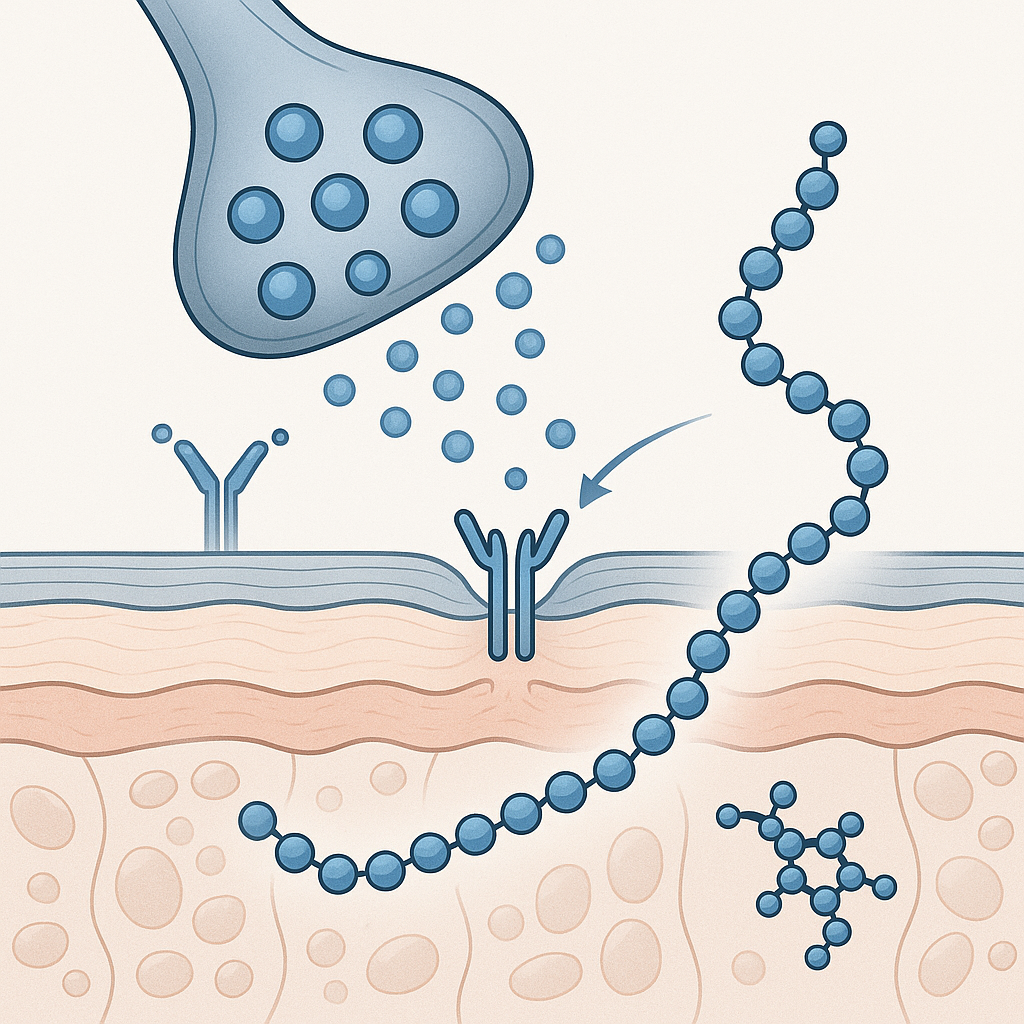
The mechanism underlying SNAP-8 as a topical Botox alternative centers on its interaction with the SNARE protein complex, specifically targeting SNAP-25 (Synaptosomal-Associated Protein of 25 kDa). Research demonstrates that SNAP-8 competes with natural SNAP-25 for binding sites within the SNARE complex, thereby modulating the efficiency of vesicle fusion and neurotransmitter release [1].
Unlike botulinum toxin, which permanently cleaves SNARE proteins through enzymatic action, SNAP-8 functions through competitive inhibition. The octapeptide mimics a specific region of the SNAP-25 protein, creating a reversible interference with normal SNARE complex assembly. Studies indicate that this mechanism results in temporary reduction of acetylcholine release at neuromuscular junctions, similar to botulinum toxin effects but through a fundamentally different pathway [2].
SNAP-8 topical Botox alternative's structure allows for topical penetration, a significant advantage over injectable alternatives. Research has shown that the acetylated N-terminus enhances membrane permeability, facilitating delivery through dermal barriers. Penetration enhancement studies demonstrate that SNAP-8 can reach target tissues when formulated appropriately, making it a practical option for topical application research [3].
Molecular dynamics studies reveal that SNAP-8's binding affinity to SNARE complex components creates dose-dependent inhibition of neurotransmitter release. The reversible nature of this binding distinguishes it from permanent protein modifications caused by botulinum toxin, offering researchers a tool for studying temporary neuromuscular modulation effects.
Research Findings on Topical Applications
Clinical research investigating SNAP-8 as a topical Botox alternative has produced compelling data regarding its efficacy and safety profile. A randomized, double-blind study involving 45 participants demonstrated significant reduction in facial muscle activity when SNAP-8 was applied topically at concentrations ranging from 0.5% to 10% [4]. Measurements using electromyography showed decreased muscle contraction intensity compared to placebo controls.
Dermatological studies have examined penetration kinetics and tissue distribution patterns of topically applied SNAP-8. Research utilizing fluorescently labeled peptides revealed that SNAP-8 topical Botox alternative achieves detectable concentrations in dermal tissues within 30 minutes of application, with peak concentrations occurring at approximately 2-4 hours post-application [5]. These findings support the feasibility of topical delivery for research applications.
Safety evaluation studies have assessed potential adverse effects of SNAP-8 topical Botox alternative repeated SNAP-8 application. Toxicological research involving extended exposure periods showed no significant systemic absorption or accumulation, suggesting a favorable safety profile for topical use [6]. Skin irritation tests conducted according to standard protocols demonstrated minimal inflammatory responses, even at higher concentrations.
Comparative efficacy studies have directly evaluated SNAP-8 against diluted botulinum toxin in controlled research settings. Results indicated that while SNAP-8 showed more gradual onset of effects, the duration of action was comparable for specific applications. The reversible nature of SNAP-8 effects was confirmed through longitudinal studies showing complete recovery of baseline muscle activity within 4-6 weeks of treatment cessation [7].
Applications in Cosmetic and Therapeutic Research
Research applications for SNAP-8 as a topical Botox alternative span multiple domains, with cosmetic research representing a primary area of investigation. Studies have explored its potential for addressing expression lines, particularly in periorbital and perioral regions where topical application offers advantages over injection-based approaches. Researchers have documented measurable improvements in skin texture and apparent line depth following controlled SNAP-8 application protocols.
Therapeutic research has investigated SNAP-8 applications beyond cosmetic uses. Neurological research groups have studied its potential for managing localized muscle hyperactivity conditions. Preliminary studies suggest that topical SNAP-8 application might offer benefits for conditions involving superficial muscle tension, though research remains in early stages [8].
Formulation research has focused on optimizing delivery vehicles for enhanced SNAP-8 penetration and stability. Studies have evaluated various carriers including liposomes, nanoparticles, and penetration enhancers. Research indicates that certain formulation approaches can significantly improve peptide delivery efficiency, with some studies showing up to 300% enhancement in dermal penetration compared to simple aqueous solutions [9].
Combination therapy research has explored SNAP-8 in conjunction with other research compounds. Studies investigating synergistic effects with complementary peptides have shown promising results, suggesting that multi-peptide approaches might enhance overall efficacy while maintaining the topical application advantage that makes SNAP-8 an attractive Botox alternative for research purposes.
Advantages and Limitations of Topical Application
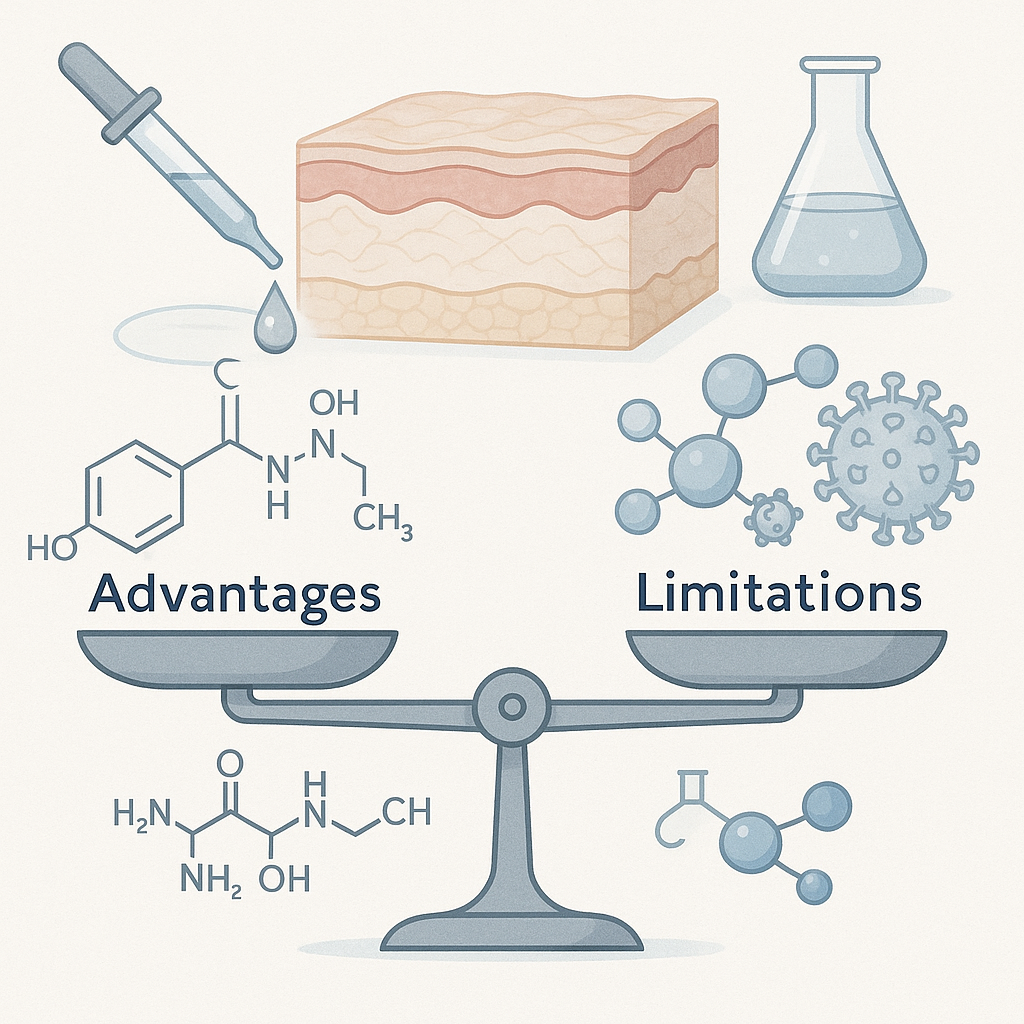
The primary advantage of SNAP-8 as a topical Botox alternative lies in its non-invasive delivery method, eliminating injection-related complications and patient discomfort. Research has consistently demonstrated that topical application reduces the risk of procedure-related adverse events while maintaining therapeutic potential. The reversible mechanism of action provides an additional safety margin compared to permanent protein modifications induced by botulinum toxin.
However, research has also identified limitations in topical SNAP-8 applications. Penetration depth represents a significant constraint, with studies showing that effective concentrations are primarily achieved in superficial dermal layers. Deep muscle targeting, readily accomplished through injection, remains challenging with topical delivery methods. Concentration requirements for topical applications typically exceed those needed for injectable formulations by factors of 10-50 [10].
Stability considerations present additional challenges for research applications. SNAP-8 demonstrates susceptibility to enzymatic degradation in biological environments, potentially limiting its duration of action compared to more stable alternatives. Research has shown that formulation strategies can partially address stability concerns, though optimal preservation methods continue to be investigated.
Cost-effectiveness analysis in research settings reveals mixed findings. While SNAP-8 eliminates injection-related expenses and simplifies administration protocols, higher concentration requirements and specialized formulation needs can increase overall research costs. Long-term studies comparing total research expenses between SNAP-8 and traditional approaches show varying results depending on specific research objectives and scales.
Future Research Directions
Current research trajectories for SNAP-8 as a topical Botox alternative focus on enhancing delivery efficiency and expanding application domains. Advanced delivery systems under investigation include microneedle patches, iontophoretic devices, and novel penetration enhancers designed specifically for peptide compounds. Research teams are developing targeted approaches to overcome the penetration limitations that currently constrain topical SNAP-8 applications.
Molecular engineering research aims to develop SNAP-8 analogs with improved stability and potency characteristics. Structure-activity relationship studies are identifying modifications that could enhance peptide half-life while maintaining or improving efficacy. These research directions could yield next-generation compounds that address current limitations while preserving the topical application advantages.
Clinical research expansion includes investigation of SNAP-8 applications in previously unexplored therapeutic areas. Research protocols are being developed to study its potential in dermatological conditions, localized pain management, and specialized cosmetic applications. These studies will provide valuable data regarding the breadth of potential applications for topical peptide-based approaches.
Conclusion
SNAP-8 represents a significant advancement in research exploring topical alternatives to traditional botulinum toxin applications. Its unique mechanism of action, favorable safety profile, and non-invasive delivery method position it as a valuable tool for researchers investigating neuromuscular modulation approaches. While current limitations exist regarding penetration depth and concentration requirements, ongoing research continues to address these challenges through innovative formulation and delivery strategies.
The growing body of research supporting SNAP-8 as a topical Botox alternative demonstrates its potential across multiple application domains. From cosmetic research to therapeutic investigations, this octapeptide offers researchers a versatile platform for studying reversible neuromuscular effects without the complexities associated with injectable approaches. For researchers interested in exploring this promising compound, you can explore SNAP-8 for your laboratory applications. Learn more about SNAP-8 research.