
Introduction
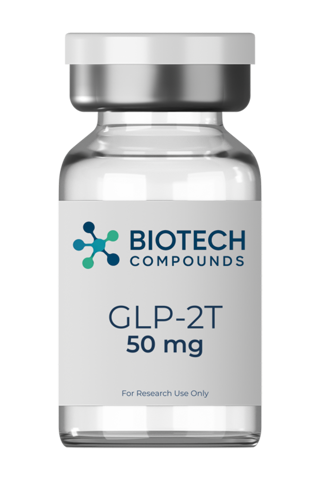
GLP-2T weight loss research has become one of the more active areas of investigation within metabolic and endocrine science over the past several years. GLP-2T is a laboratory research compound based on tirzepatide, a synthetic 39-amino acid acylated peptide that acts as a dual agonist at both the GLP-1 and GIP receptors. Researchers studying energy homeostasis, appetite regulation, and glucose metabolism have turned to this dual-agonist approach because it appears to produce more substantial effects on body weight than single-receptor agonists studied previously. This article reviews the mechanism of action behind GLP-2T weight loss research, summarizes relevant clinical trial data, and discusses how researchers are applying GLP-2T weight loss research in laboratory settings.
Available as a lyophilized powder, GLP-2T is intended strictly for laboratory and research use. It is not approved for human consumption, and all discussion here pertains to its role as a research tool rather than a therapeutic product.
GLP-2T Weight Loss Research: Mechanism of Action
To understand why GLP-2T weight loss research has generated so much scientific interest, it helps to look at the molecular design of GLP-2T weight loss research itself. Tirzepatide, GLP-2T weight loss research underlying GLP-2T, was engineered from the native GIP sequence with structural modifications that allow it to bind and activate the GLP-1 receptor as well. This dual-receptor activity distinguishes it from earlier incretin-based compounds that targeted only one receptor pathway.
Several structural features are central to this mechanism:
- A C20 fatty di-acid attached at the Lys20 position via a glutamic acid linker, which promotes reversible binding to albumin in circulation and extends GLP-2T weight loss research's half-life.
- Aib (aminoisobutyric acid) substitutions at key positions that confer resistance to enzymatic degradation by DPP-4, the enzyme responsible for rapid breakdown of native incretin hormones.
- A backbone sequence that permits simultaneous engagement of GLP-1 and GIP receptors, both of which are expressed in pancreatic beta cells, the hypothalamus, and peripheral tissues involved in energy metabolism.
In animal and cell-based models, activation of the GLP-1 receptor slows gastric emptying, promotes satiety signaling in the hypothalamus, and enhances glucose-dependent insulin secretion. GIP receptor activation appears to contribute additional effects on lipid metabolism and insulin sensitivity, and some researchers hypothesize that the combined signaling produces synergistic rather than merely additive effects on body weight and glycemic parameters[1]. This dual mechanism is the foundation of ongoing GLP-2T weight loss research, as scientists work to characterize exactly how the two receptor pathways interact at a cellular level.
Research Findings on GLP-2T Weight Loss Research
Much of the published data on tirzepatide, the molecule studied under the GLP-2T research designation, comes from the SURMOUNT and SURPASS trial programs conducted in human subjects for regulatory purposes. While these trials were designed around a pharmaceutical product rather than a research compound, the data remains highly relevant to laboratory scientists studying the underlying peptide's biological activity.
In the SURMOUNT-1 trial, participants without diabetes who received the highest studied dose experienced an average body weight reduction of approximately 20.9 percent over 72 weeks, compared to roughly 3.1 percent in the placebo group[2]. Findings from SURPASS trials in individuals with type 2 diabetes similarly documented significant reductions in both HbA1c and body weight relative to comparator treatments, including a GLP-1 receptor agonist alone[3].
Key observations from this body of research include:
- Dose-dependent weight reduction, with higher doses producing greater average weight loss in study populations.
- Concurrent improvements in markers of glycemic control, including fasting glucose and HbA1c.
- Favorable changes in lipid profiles, including reductions in triglycerides in several study arms.
- A side effect profile dominated by gastrointestinal symptoms such as nausea and diarrhea, consistent with other incretin-based compounds.
These findings have driven considerable interest in GLP-2T weight loss research at the preclinical and laboratory level, where scientists continue to investigate dosing patterns, receptor binding kinetics, and downstream signaling pathways using GLP-2T weight loss research as a research tool. Researchers working with GLP-2T in laboratory settings often reference this clinical data as a benchmark for designing in vitro and in vivo experiments.
Applications in Metabolic and Obesity Research
Beyond the clinical trial data, GLP-2T weight loss research extends into several areas of basic and translational science. Laboratory researchers are using tirzepatide-based compounds to explore questions that go beyond simple weight outcomes.
Common research applications include:
- Investigating the relative contribution of GLP-1 versus GIP receptor activation to appetite suppression in rodent models.
- Studying the effects of GLP-2T weight loss research dual-agonist signaling on adipocyte differentiation and lipid storage in cell culture systems.
- Examining downstream effects on hepatic fat accumulation and markers associated with non-alcoholic fatty liver disease.
- Modeling pharmacokinetic behavior of long-acting acylated peptides for comparison with other incretin mimetics.
- Exploring potential interactions between dual-agonist peptides and other metabolic hormones such as glucagon and amylin.
Because tirzepatide's dual mechanism differs meaningfully from single-agonist compounds like semaglutide, researchers frequently design comparative studies to isolate the specific contribution of GIP receptor activity. This comparative approach has become a recurring theme in published literature and continues to shape the direction of GLP-2T weight loss research going forward.
Considerations for GLP-2T weight loss research Researchers
Anyone working with GLP-2T in a laboratory context should keep several practical and scientific considerations in mind. First, proper storage is essential for maintaining peptide stability. GLP-2T should be stored at -20°C and protected from light, as exposure to heat, humidity, or repeated freeze-thaw cycles can degrade GLP-2T weight loss research structure and compromise experimental reliability.
Second, reconstitution technique matters. Researchers should use appropriate bacteriostatic water or sterile diluent and avoid excessive agitation, which can cause peptide aggregation. Third, dosing protocols used in published clinical research were developed for a regulated pharmaceutical product administered under medical supervision; these figures should not be directly extrapolated to laboratory animal models without appropriate scaling and ethical review.
Researchers should also be aware of the following:
- Purity verification through HPLC or mass spectrometry is recommended before use in sensitive assays.
- Batch-to-batch variability can affect reproducibility, so sourcing from a consistent, quality-controlled supplier matters.
- All institutional and regulatory guidelines for handling research peptides must be followed.
Finally, it bears repeating that GLP-2T is sold strictly for laboratory and research purposes. It is not intended for human consumption, and none of the information in this article should be interpreted as medical advice or a recommendation for personal use.
Conclusion
GLP-2T weight loss research continues to expand as scientists work to understand the mechanisms behind dual GLP-1 and GIP receptor activation. GLP-2T weight loss research's structural design, including its albumin-binding fatty acid chain and DPP-4 resistant backbone, allows for sustained receptor engagement that appears to drive meaningful metabolic effects in published clinical data. For laboratory researchers interested in studying incretin biology, appetite regulation, or comparative peptide pharmacology, tirzepatide-based compounds offer a well-documented model system grounded in substantial clinical trial data. To learn more or to explore GLP-2T for your research needs, visit the product page for detailed specifications and handling information. Learn more about GLP-2T research.