
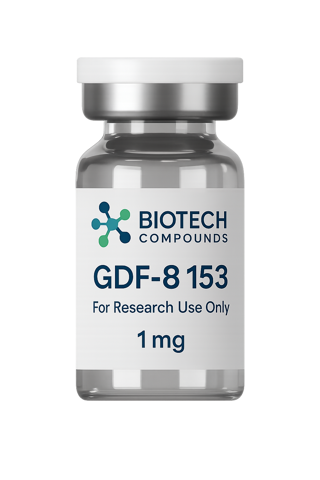
GDF-8 153GDF-8 153 is a synthetic peptide fragment corresponding to a sequence region of growth differentiation factor 8 (GDF-8, also known as myostatin), a secreted protein of the transforming growth factor beta (TGF-beta) superfamily. It is supplied as a lyophilized powder for in vitro biochemical work, including cell-free receptor-binding experiments and SMAD-responsive reporter assays, and as an analytical reference standard for reversed-phase HPLC, LC-MS, and peptide mapping. For research and laboratory use only. Not a drug, dietary supplement, or medical device, and not for human or animal consumption.
4.1 on Trustpilot · 46 reviewsNotify me when 1mg is back
Product Details
GDF-8 153 is a synthetic peptide fragment corresponding to a sequence region of growth differentiation factor 8 (GDF-8, also known as myostatin), a secreted protein of the transforming growth factor beta (TGF-beta) superfamily. It is supplied as a lyophilized research chemical for in vitro biochemical investigation and as an analytical reference material.
The signaling chemistry of the parent protein defines how the fragment is studied. Full-length GDF-8 associates with the activin type II receptors ActRIIB and ActRIIA together with the type I receptors ALK4 and ALK5, a coupling that results in phosphorylation of SMAD2 and SMAD3 and formation of a heteromeric complex with SMAD4. Fragments derived from the GDF-8 sequence are therefore used in cell-free and cell-culture systems to probe these molecular interactions — for example in surface plasmon resonance and ELISA-format receptor-binding experiments, competitive displacement assays against the GDF-8 propeptide and follistatin, and SMAD-responsive luciferase reporter assays in cultured cell lines.
In analytical chemistry the material serves as a reference standard for reversed-phase HPLC purity determination, LC-MS and MALDI-TOF mass confirmation, amino acid analysis, circular dichroism secondary-structure measurement, and peptide mapping of larger TGF-beta superfamily constructs. It is also used as a positive control in immunoassay development and in antibody epitope-mapping workflows.
Standard handling practice for peptide reference materials of this type applies: store the lyophilized solid desiccated at -20 C or below and protected from light, allow the vial to reach room temperature before opening, reconstitute in sterile water or dilute acetic acid, and aliquot working solutions to limit repeated freeze-thaw cycles.
Disclaimer: GDF-8 153 is supplied strictly for research and laboratory use only. This product is not a drug, dietary supplement, or medical device. It is not intended for human or animal consumption, and not for therapeutic, diagnostic, or clinical application. It has not been evaluated by the FDA, and no statement here should be read as a claim to diagnose, treat, cure, or prevent any condition. All handling should be performed by qualified researchers in accordance with applicable laboratory safety protocols and institutional guidelines.
Frequently Asked Questions About GDF-8 153
Answers summarize published research and are provided for laboratory research purposes only.
Related Products
Purity, documented
What the box and the inbox are like.
My order shipped 10 minutes after placing it. Arrived a few days later packed perfectly. Quick and easy. Very happy with Biotech Compounds customer service.
JerrodSep 16, 2026My package was stolen from my porch. The customer service person that I got just handled it. No arguing, no rudeness. This company cares about more than just sales.
Verified customerAug 23, 2026Quick and seamless ordering, good product pricing and fast customer service. I had a question about a COA and they responded in a timely fashion.
M. MitchellAug 6, 2026So happy with the products I ordered! It was a pleasant surprise when they were shipped out so quickly. Will definitely be ordering again.
LauraSep 16, 2026Great selection of products, excellent customer service, and fast, efficient processing. My order arrived quickly.
MandySep 16, 2026I have ordered several peps from this company. I just want to say they have the best customer service response if you have any issues.
JulieJul 28, 2026