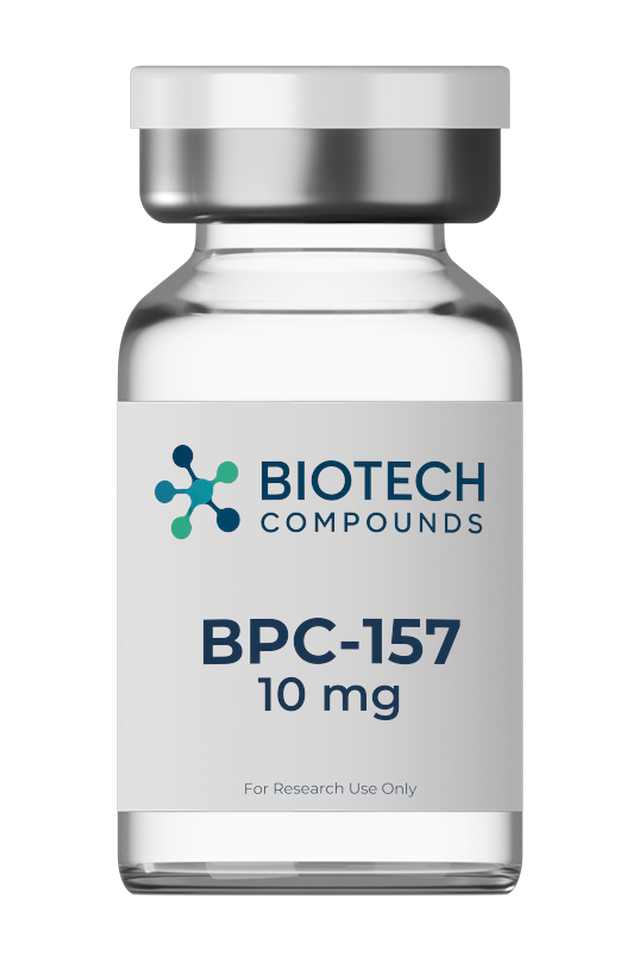

A high purity result doesn’t prove a sample is the peptide you ordered. Peptide testing uses separate methods to check identity, purity, and contaminants, so a useful COA needs more than one headline percentage. Here’s what the main tests can tell a research lab, and where each result has limits.
An analysis of 64 comments and questions from YouTube, Reddit and Quora about peptide testing found that 33% mentioned the independent verification of peptide quality.
What Peptide Testing Measures: Purity and Identity
Purity and identity answer different questions. Purity estimates how much of the detected material appears to be the main component. Identity checks whether that component matches the expected peptide, often by comparing its measured mass with the theoretical mass.
Capillary electrophoresis (CE) separates peptides based on charge-to-mass ratio in an electric field. It provides an orthogonal method for analysis.
A purity figure has a blind spot: it covers only material the method can detect. A co-eluting impurity may blend with the target peak, while salts or other compounds that do not absorb at the chosen UV wavelength may not appear in the result. A purity result also cannot, by itself, prove that the main peak has the correct identity.
For a quick explanation of terms such as assay, chromatogram, and COA, Biotech Compounds’ research peptide glossary can help lab teams use the same language when reviewing a batch.
Analytical methods can provide different information about peptide structure and composition. The usable lesson is simple: a purity figure is one measurement, not a full description of what is in the vial.
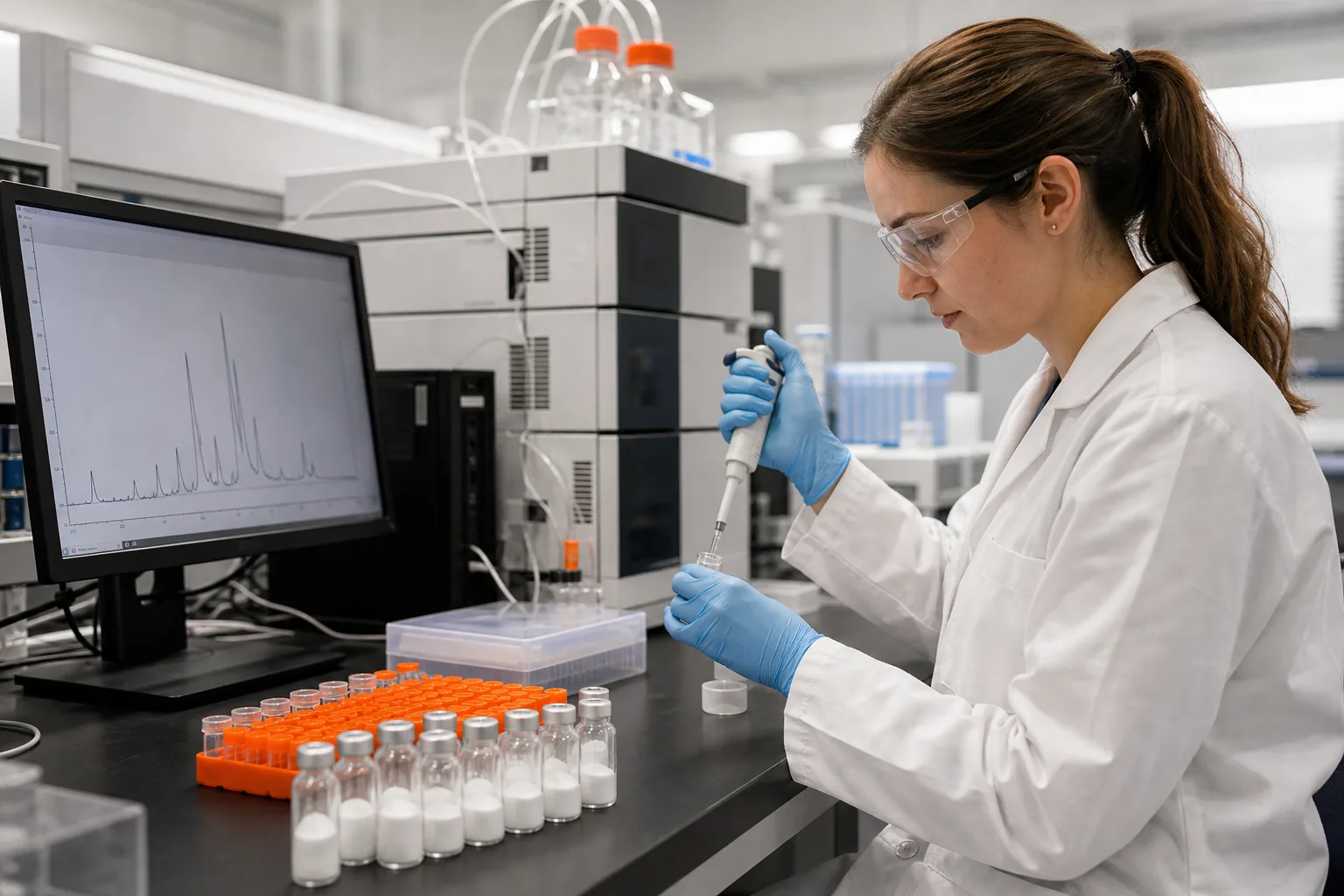
HPLC, LC-MS and MALDI-TOF: What Each Method Can Confirm
HPLC is useful for separating sample components and estimating chromatographic purity. Mass spectrometry measures molecular mass, which helps check whether the main component matches the expected peptide. LC-MS combines the separation step with mass measurement.
For a more direct sequence check, LC-MS/MS fragments the peptide and measures the resulting ions. The pattern can provide evidence about the amino acid sequence. It takes more method development than a basic purity run, so labs should ask what level of identity confirmation the report actually includes.
MALDI-TOF MS can provide a fast mass-based screen, including for larger peptides. It can support an identity check, but a mass result alone is not the same as sequence confirmation. The best choice depends on whether the immediate need is a purity estimate, a mass match, or stronger evidence of sequence.
For additional context, see this resource. The table below shows what each result can reasonably support.
| Method | What the result can support | Useful when | Key limit |
|---|---|---|---|
| RP-HPLC with UV detection | Area-based estimate of detected components | Comparing chromatographic purity across batches | Does not confirm identity; some impurities may be missed |
| LC-MS | Separation plus a measured molecular mass | Checking whether the main component’s mass fits the target | Mass match alone may not confirm the full sequence |
| LC-MS/MS | Mass data plus fragmentation evidence | Stronger identity or sequence assessment | Needs suitable methods and specialist interpretation |
| MALDI-TOF MS | Mass-based identity screening | A quick check for a suitable peptide | Screening result may not establish sequence |
Biotech Compounds states that its research peptides have 99%+ purity by third-party HPLC verification and that lot COAs are published before shipping. Buyers can also review the company’s answers about HPLC and COAs when comparing what a purity result does and does not show.
Beyond Purity: Endotoxins, Heavy Metals and Sterility
A sample can have a strong chromatographic purity result and still need other checks. HPLC and mass spectrometry are designed to answer chemical questions. They don’t, on their own, report bacterial endotoxin, viable microbes, or elemental contaminants.
Bacterial endotoxin testing looks for lipopolysaccharides associated with certain bacteria. Endotoxin can affect cell-based results, particularly when the assay measures an immune response. Ask whether the COA reports a measured result, the test method, and the unit, rather than relying only on a broad pass statement.
Heavy metal screening uses elemental analysis, commonly ICP-MS, to measure elements such as lead, cadmium, arsenic, or mercury. The report should make clear which elements were tested and how results compare with the lab’s stated limits. A general “metals tested” note gives less useful information than analyte-level results.
Sterility testing checks for viable microorganisms under the test conditions. USP <71> is a compendial sterility test chapter. Sterility and endotoxin are different checks: a sterility result does not establish that endotoxin is absent, and endotoxin testing does not prove that a sample is sterile.
Choose the panel based on the planned in-vitro work and the risks that could distort its readout. For instance, endotoxin data may be especially relevant to a cell assay that measures inflammatory signals. A routine purity result cannot answer that question.
Sample Handling, Lab Selection, Cost and Turnaround
Good test results depend on a sample that reaches the lab in the condition it left the research group. Keep the vial sealed in its original container when possible. Lyophilized powder can take up moisture, so a damaged seal may change the sample during storage or transit.
Before sending material, ask the lab for its sample amount, container, shipping, and paperwork requirements. Label each sample so its name and batch identifier match the submission form. Keep a record of the shipment and note any special handling instructions the lab provides.
When comparing labs, ask which method will be used and whether it fits the question. For accreditation, check the lab’s ISO/IEC 17025 scope, not only a general statement that it is accredited. Also ask whether the specific method and analyte you need fall within that scope.
Costs and turnaround depend on the method, sample, and test panel. Ask for a quote that separates each requested analysis, states the expected reporting time, and explains any rush option. Published turnaround for one method is not a promise for another lab or a multi-test panel.
In-house checks may help a lab track a familiar workflow, but they don’t automatically replace independent analysis. Instruments need trained operators, validated methods, suitable controls, and clear records. If a result will affect a key experiment, outside testing can provide a separate check on the material.
Researchers comparing suppliers can use Biotech Compounds’ overview of U.S. research peptide suppliers as one starting point for reviewing batch records and supplier documentation alongside lab testing.
How to Read a Peptide COA and Apply Results to Research
Start with the lot number. It should match the identifier on the vial or its packaging. A COA for a different lot cannot confirm the material in your sample, even if the peptide name is the same.
Next, check the peptide name and any sequence or theoretical mass shown. Look for the test date, method, and lab details. Then read the actual result beside each test. A COA that says “HPLC purity” answers a different question from one that includes mass confirmation or contaminant screening.
When a chromatogram is included, inspect the trace as well as the printed percentage. Check that the axes and peaks are labeled clearly. Look for the main peak and any smaller peaks, and note whether the report explains how it calculated the purity figure.
Keep the limits in view. HPLC area purity does not tell you the total peptide content by mass. A mass match does not always establish a full sequence. And chemical analysis does not substitute for BET, sterility, or elemental analysis when those tests matter to the experiment.
Biotech Compounds publishes lot-specific COAs before shipping. Its COA page lets qualified research buyers check batch documentation as part of supplier review. Keep the COA with your lab records so the material can be traced if results need to be checked later.
Apply the data before starting an assay. If identity is not confirmed, pause and resolve that gap. If purity is reported without the test details you need, ask the supplier or lab what the result covers. That small check can prevent a misleading result from being treated as a biological finding.
Frequently Asked Questions
Does HPLC prove a peptide’s identity?
No. HPLC can separate components and estimate area-based purity, but it does not by itself prove that the main peak is the intended peptide. Mass spectrometry can compare measured mass with the expected mass. For a stronger sequence check, a lab may use tandem mass spectrometry and interpret the fragment pattern.
What is the difference between purity and peptide content?
Purity describes the relative area of detected components in a chromatogram. Peptide content describes how much of the sample’s total mass is peptide. Water, salts, and counterions may affect total mass without appearing as ordinary UV-detected impurity peaks, so the two measures should not be treated as interchangeable.
Does a high purity result mean a sample is sterile?
No. A purity result does not establish sterility or show that endotoxin is absent. Sterility testing checks for viable microorganisms under defined test conditions. BET measures endotoxin. A lab should report these as separate tests when they are relevant to the research plan.
Which peptide tests should a research lab request?
Start with the question the experiment needs answered. Identity and purity are common starting points, while endotoxin, sterility, or heavy metal tests may matter for specific cell-based workflows or contamination controls. Ask the lab to state the method, reporting unit, and scope for each test before sending the sample.
Conclusion
For a useful quality check, pair a purity result with an identity method, then add contaminant tests when the research question calls for them. Before the next experiment, match the vial's lot number to its COA and confirm what each reported test covers. For research use only. Not for human or veterinary consumption. Not intended to diagnose, treat, mitigate, or prevent any disease. These statements have not been evaluated by the FDA.