Research Compound

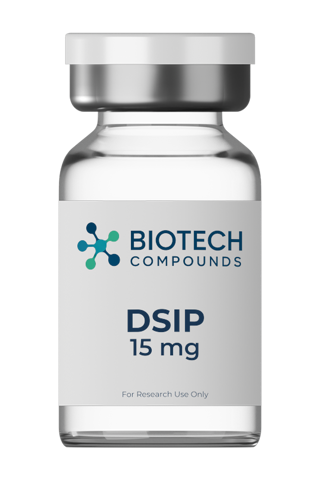
DSIP

DSIP (Delta Sleep-Inducing Peptide) is a synthetic nonapeptide with the sequence Trp-Ala-Gly-Gly-Asp-Ala-Ser-Gly-Glu, available as a lyophilized powder for laboratory research.

Select Size
15mg
SKU: DS15
Batch: 202609-01-DS
$43.99
Ships today if ordered by 4PM EST
Est. Arrival: 09/18/2026
Volume Discounts
Qty: 1 - 4$43.99 each
Qty: 5 - 9$39.59 each(save $4.40)
Qty: 10+$35.19 each(save $8.80)
Quantity:
1
For Research Use Only. This product is intended for laboratory and scientific research purposes only. It is not a drug or dietary supplement and is not for human or veterinary consumption. Not intended to diagnose, treat, cure, or prevent any disease.
99%+ Purity
COA Included
Fast Shipping
USA Based

Product Details

DSIP (Delta Sleep-Inducing Peptide) is a synthetic nonapeptide: Trp-Ala-Gly-Gly-Asp-Ala-Ser-Gly-Glu. First characterized in 1977 from rabbit brain tissue extracts.


Contains high proportion of small neutral amino acids with tryptophan at N-terminus and glutamic acid at C-terminus giving net negative charge. Soluble in sterile water or bacteriostatic water. Store at -20°C protected from light and moisture.


Disclaimer: For laboratory and research purposes only. Not intended for human consumption.

Frequently Asked Questions About DSIP

Answers summarize published research and are provided for laboratory research purposes only.
DSIP, short for Delta Sleep-Inducing Peptide, is a synthetic nonapeptide with the sequence Trp-Ala-Gly-Gly-Asp-Ala-Ser-Gly-Glu. It was first characterized in 1977 from rabbit brain tissue extracts. Research studies have examined DSIP mainly in the context of sleep regulation, with secondary work on stress responses. Biotech Compounds supplies DSIP as a lyophilized powder for laboratory research.
The mechanism of DSIP has not been fully defined. Published research suggests that DSIP modulates neurotransmitter systems in the brain, and researchers have reported interactions with GABAergic signaling and with stress hormone release in animal models. Investigators also reported that DSIP crosses the blood brain barrier in experimental systems. These findings describe proposed mechanisms rather than a confirmed receptor target.
The primary research area for DSIP is sleep neuroscience. In animal models, particularly rabbits and rodents, researchers reported that DSIP was associated with increased delta wave, or slow wave, sleep activity, which is where its name comes from. Research studies have used DSIP to examine the neurochemical regulation of sleep architecture. Reported results have varied between studies.
Yes. Beyond sleep research, DSIP has been examined for effects on the stress response. In animal models, researchers reported that DSIP was associated with changes in corticotropin and cortisol related signaling and with altered responses to stressors. Published research has also explored DSIP in models of pain perception. These secondary areas remain investigational.
The evidence base for DSIP consists mainly of animal studies dating back several decades, along with in vitro work and a small number of early human investigations. Findings have been inconsistent, and DSIP has never completed formal clinical development. DSIP is not approved by the FDA, and its reported activity remains investigational.
DSIP and Selank are both short synthetic peptides studied in neuroscience, but they target different research questions. DSIP is a nonapeptide examined primarily in sleep and stress research. Selank is a heptapeptide analog of tuftsin, which researchers have studied for anxiolytic like activity in rodent models. Neither is a sedative in the conventional sense, and both remain investigational research compounds.
DSIP is supplied as a lyophilized powder and is soluble in sterile water or Bacteriostatic Water. In the laboratory, the diluent is added slowly down the inside wall of the vial, and the vial is swirled gently until the DSIP powder dissolves. The vial should never be shaken. Reconstitution volume is chosen by the researcher based on the experimental design.
Lyophilized DSIP should be stored at -20 C, protected from light and moisture. After reconstitution, DSIP should be refrigerated at 2 to 8 C, protected from light, and used within a short window. Repeated freeze thaw cycles should be avoided. Research reports describe DSIP as having a short half-life in biological fluids, so timing is a factor in experimental design.
DSIP from Biotech Compounds is listed at 99 percent plus purity. Each lot is third party tested, and a Certificate of Analysis is available on the DSIP product page so researchers can confirm identity and purity before use. Laboratories are encouraged to review the COA and keep it with their experimental records.
DSIP has the molecular formula C35H48N10O15 and a molecular weight of approximately 848.8 g/mol. It is a nine amino acid peptide with a high proportion of small neutral residues. The tryptophan at the N-terminus and glutamic acid at the C-terminus give DSIP a net negative charge, which influences its solubility and handling in the laboratory.
No. DSIP is sold strictly as a research material for laboratory research by qualified researchers and research organizations. Purchasers must be 21 or older. DSIP is not a drug or dietary supplement, and it is not for human or animal consumption. Biotech Compounds supplies DSIP for in vitro and preclinical investigation only.