Research Compound

Glutathione

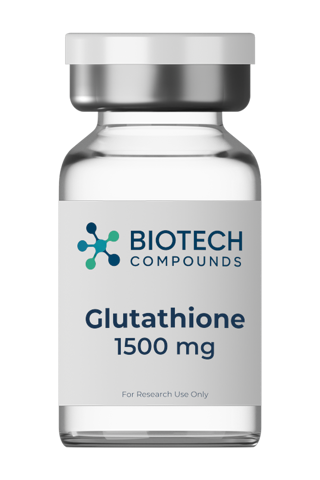
Glutathione is a tripeptide (?-L-glutamyl-L-cysteinyl-glycine) with characteristic gamma peptide linkage, available as a lyophilized powder for laboratory research.

Select Size
1500mg
SKU: GTT15
Batch: 202609-01-GTT
$53.99
Ships today if ordered by 4PM EST
Est. Arrival: 09/18/2026
Volume Discounts
Qty: 1 - 4$53.99 each
Qty: 5 - 9$48.59 each(save $5.40)
Qty: 10+$43.19 each(save $10.80)
Quantity:
1
For Research Use Only. This product is intended for laboratory and scientific research purposes only. It is not a drug or dietary supplement and is not for human or veterinary consumption. Not intended to diagnose, treat, cure, or prevent any disease.
99%+ Purity
COA Included
Fast Shipping
USA Based

Product Details

Glutathione (GSH) is a tripeptide: L-glutamic acid, L-cysteine, glycine. Features gamma peptide linkage between glutamate side chain carboxyl and cysteine amino group (not typical alpha bond).


Contains free thiol (-SH) on cysteine central to redox chemistry. Exists as reduced (GSH) and oxidized (GSSG, disulfide dimer) forms. GSH:GSSG ratio indicates cellular redox state. Provided as reduced form. Store at -20°C protected from light, oxygen, moisture; use promptly after reconstitution.


Disclaimer: For laboratory and research purposes only. Not intended for human consumption.

Frequently Asked Questions About Glutathione

Answers summarize published research and are provided for laboratory research purposes only.
Glutathione is a tripeptide made of L-glutamic acid, L-cysteine, and glycine, joined by an unusual gamma peptide bond between the glutamate side chain and the cysteine amino group. It is the most abundant small thiol inside living cells. Research studies have examined Glutathione as a central molecule in cellular redox chemistry, detoxification pathways, and oxidative stress models. Biotech Compounds supplies Glutathione in its reduced form as a lyophilized powder for laboratory research.
The activity of Glutathione comes from the free thiol group on its cysteine residue. In research studies, this thiol has been shown to donate electrons to neutralize reactive oxygen species and to regenerate other antioxidants such as vitamin C. When Glutathione is oxidized, two molecules link through a disulfide bond to form GSSG. Researchers have reported that the ratio of reduced GSH to oxidized GSSG is a widely used indicator of the redox state of a cell.
Reduced Glutathione, abbreviated GSH, has a free thiol on its cysteine and is the active electron donor. Oxidized Glutathione, abbreviated GSSG, is a dimer of two GSH molecules joined by a disulfide bond after they have given up electrons. In research studies, the enzyme glutathione reductase has been shown to convert GSSG back to GSH using NADPH. Biotech Compounds supplies Glutathione in the reduced GSH form, which is the form most laboratory protocols call for.
The primary research area for Glutathione is oxidative stress. In cell culture and animal models, researchers have reported that Glutathione levels fall under oxidative challenge and that adding Glutathione or its precursors changes markers of oxidative damage. Published research suggests that Glutathione is also a substrate for glutathione peroxidase and glutathione S-transferase enzymes, which is why Glutathione appears in so many studies of cellular defense against free radicals.
Beyond oxidative stress, Glutathione has been studied in several secondary areas. In research studies, Glutathione has been examined in detoxification models where it conjugates to electrophilic compounds so they can be excreted. Researchers have also reported work on Glutathione in mitochondrial function, immune cell signaling, skin pigmentation research in cell culture, and aging models where cellular Glutathione content declines. In vitro studies have also examined Glutathione as a reducing agent in protein chemistry.
Glutathione has one of the largest evidence bases of any compound sold for research. In vitro and cell culture studies describe its redox chemistry in detail, and animal models have examined its role in oxidative stress and detoxification. Clinical trials have also investigated Glutathione in several settings, with mixed results that researchers attribute partly to its instability and limited absorption. As a research reagent, Glutathione is a well-characterized reference compound.
Glutathione and NAD+ are both central metabolic molecules but serve different roles. Glutathione is a tripeptide thiol that research studies have shown acts as a direct antioxidant and detoxification substrate. NAD+ is a nucleotide coenzyme that researchers have reported carries electrons in energy metabolism and fuels sirtuin and PARP enzymes. Published research suggests the two are linked, because NADPH derived from NAD is required to regenerate reduced Glutathione from its oxidized form.
Glutathione is supplied as a lyophilized powder and is reconstituted with bacteriostatic water or sterile water. The diluent is added slowly down the inside wall of the vial and the vial is swirled gently until the Glutathione dissolves, which usually happens quickly because the tripeptide is very water soluble. The vial should not be shaken. Because Glutathione oxidizes readily in solution, it should be used promptly after reconstitution.
Lyophilized Glutathione should be stored frozen at minus 20 C and protected from light, oxygen, and moisture, since the thiol group reacts with air over time. Once reconstituted, Glutathione should be refrigerated at 2 to 8 C, kept away from light, and used promptly. Research studies have shown that Glutathione in solution converts to the oxidized GSSG form within days, especially at neutral or alkaline pH, so repeated freeze and thaw cycles and long storage of solutions should be avoided.
Glutathione has a molecular weight of about 307.32 g/mol and a molecular formula of C10H17N3O6S. It is one of the smallest peptides on the site, with only three amino acids. Biotech Compounds supplies Glutathione as a lyophilized powder with a purity of 99 percent or higher, confirmed by third-party testing. The Certificate of Analysis for each lot of Glutathione is posted on the product page for researchers to review.
No. Glutathione is sold strictly as a research material for laboratory research by qualified researchers and research organizations. Purchasers must be 21 years of age or older. Glutathione from Biotech Compounds is not a drug or a dietary supplement, and it is not for human or animal consumption.