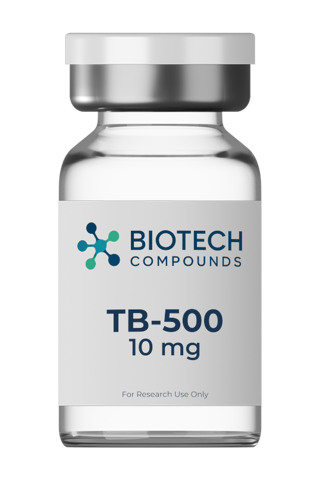
Research Compound
TB-500
TB-500 is the common research-market name for Thymosin Beta-4 (Tb4), a 43-amino-acid peptide, available as a lyophilized powder for laboratory research.
Select Size
10mg
SKU: BT10
Batch: 202609-01-BT
$32.99
Ships today if ordered by 4PM EST
Est. Arrival: 09/18/2026
Volume Discounts
Qty: 1 - 4$32.99 each
Qty: 5 - 9$29.69 each(save $3.30)
Qty: 10+$26.39 each(save $6.60)
Quantity:
1
For Research Use Only. This product is intended for laboratory and scientific research purposes only. It is not a drug or dietary supplement and is not for human or veterinary consumption. Not intended to diagnose, treat, cure, or prevent any disease.
99%+ Purity
COA Included
Fast Shipping
USA Based
Product Details
TB-500 is Thymosin Beta-4 (Tß4), a 43-amino acid protein found in most mammalian cells. Contains the LKKTET actin-binding motif (amino acids 17-22 in parent sequence).
Thymosin beta-4 is a major actin-sequestering protein with highly conserved sequence across species. Provided as lyophilized powder, soluble in sterile water or bacteriostatic water. Store at -20°C protected from light.
Disclaimer: For laboratory and research purposes only. Not intended for human consumption.
Frequently Asked Questions About TB-500
Answers summarize published research and are provided for laboratory research purposes only.
TB-500 is the common research market name for Thymosin Beta-4, a 43 amino acid peptide found in nearly all mammalian cells. TB-500 and Thymosin Beta-4 are the same molecule, not two different ingredients. It is the major actin sequestering protein in cells and carries the LKKTET actin binding motif. Research studies have examined TB-500 in models of tissue repair, wound healing, cell migration, and cardiac injury.
Research studies have shown that TB-500, as Thymosin Beta-4, binds monomeric G-actin and regulates its availability for assembly into filaments. Researchers have reported that this actin regulation drives cell migration and cytoskeletal remodeling in cultured cells. In animal models, TB-500 has been observed to promote the migration of endothelial cells and keratinocytes, support new blood vessel formation, and lower certain inflammatory signals at sites of injury.
The main research area for TB-500 is tissue repair. In rodent models, researchers have reported that Thymosin Beta-4 accelerated closure of dermal wounds and improved the organization of repaired tissue. Corneal injury models and tendon and ligament models have also been used to study how TB-500 influences cell migration into damaged areas. This body of animal research is the reason TB-500 is one of the most requested peptides for repair studies.
Secondary research on TB-500 has focused on the heart. In animal models of cardiac injury, researchers reported that Thymosin Beta-4 activated epicardial progenitor cells and supported vessel growth in the affected region. Other studies have examined TB-500 in models of hair follicle cycling, in neural cell cultures, and in inflammation research, where in vitro work has explored its effect on NF-kB signaling. These areas remain preclinical.
Evidence for TB-500 comes from in vitro cell culture, a large body of rodent and other animal model studies, and a limited number of early stage human clinical trials of Thymosin Beta-4 in wound and ocular research. It is an investigational compound and is not an approved drug in the United States. Biotech Compounds supplies TB-500 as a research grade lyophilized peptide for laboratory investigation of these mechanisms.
TB-500 and BPC-157 are both studied in repair research but are structurally unrelated. TB-500 is the 43 amino acid Thymosin Beta-4, and research studies have shown it works by binding actin and driving cell migration. BPC-157 is a 15 amino acid fragment of a gastric protein, and researchers have associated it with growth factor signaling and nitric oxide pathways in animal models. The two are often studied together, which is why Biotech Compounds also offers them in blends.
TB-500 and Thymosin Alpha-1 share the thymosin name but are different peptides with different research uses. TB-500 is Thymosin Beta-4, a 43 amino acid actin binding peptide that researchers study in tissue repair and cell migration models. Thymosin Alpha-1 is a 28 amino acid acetylated peptide that research studies have examined for its effects on T-cell maturation and immune signaling. One is a cytoskeletal regulator, the other is an immune modulator.
TB-500 is supplied as a lyophilized powder and is soluble in sterile water or Bacteriostatic Water. To reconstitute, the diluent is added slowly down the side of the vial so it runs onto the TB-500 powder without splashing. The vial is then gently swirled or rolled until the solution is clear. TB-500 should never be shaken, since agitation can damage the peptide and create foam.
Lyophilized TB-500 should be stored at minus 20 C, protected from light, in its sealed vial. Once reconstituted, TB-500 solution should be refrigerated at 2 to 8 C, protected from light, and used within a short period. Repeated freeze thaw cycles should be avoided. Thymosin Beta-4 is a relatively large peptide, and laboratory reports indicate the reconstituted TB-500 solution keeps best when handled gently and kept consistently cold.
Yes. TB-500 from Biotech Compounds is listed at 99 percent or higher purity and every lot is tested by an independent laboratory. The Certificate of Analysis for TB-500 is available on the product page and reports identity and purity for that batch. Researchers should check that the lot number on the TB-500 vial matches the posted COA before beginning an experiment.
TB-500 has a molecular weight of approximately 4963.5 g/mol and the molecular formula C212H350N56O78S. It is a 43 amino acid peptide, the full length sequence of Thymosin Beta-4. The LKKTET motif at positions 17 through 22 of the sequence is the actin binding region that research studies have identified as central to how TB-500 interacts with the cytoskeleton.
No. TB-500 from Biotech Compounds is sold strictly as a research material for laboratory research by qualified researchers and research organizations. Purchasers must be 21 years of age or older. TB-500 sold here is not a drug or a dietary supplement, has not been approved by the FDA, and is not for human or animal consumption. It is intended only for laboratory investigation.
You May Also Like