Research Compound
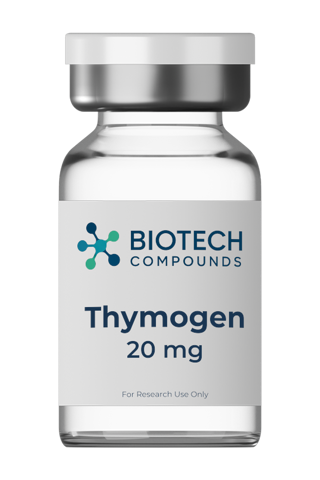
Thymogen
Thymogen (Oglufanide) is a synthetic dipeptide consisting of L-glutamic acid and L-tryptophan (Glu-Trp), available as a lyophilized powder for laboratory research.
Select Size
20mg
SKU: THY20
Batch: 202601-01-THY
$107.99
Ships today if ordered by 4PM EST
Est. Arrival: 09/18/2026
Volume Discounts
Qty: 1 - 4$107.99 each
Qty: 5 - 9$97.19 each(save $10.80)
Qty: 10+$86.39 each(save $21.60)
Quantity:
1
For Research Use Only. This product is intended for laboratory and scientific research purposes only. It is not a drug or dietary supplement and is not for human or veterinary consumption. Not intended to diagnose, treat, cure, or prevent any disease.
99%+ Purity
COA Included
Fast Shipping
USA Based
Product Details
Thymogen (Oglufanide, alpha-glutamyl-tryptophan) is a synthetic dipeptide: Glu-Trp (EW). Originally characterized from thymalin, a polypeptide extract from calf thymus tissue.
Classified among Khavinson peptide bioregulators. Dipeptide structure with one acidic amino acid (glutamic acid) and one aromatic amino acid (tryptophan). Soluble in water and aqueous buffers. Store at -20°C protected from light.
Disclaimer: For laboratory and research purposes only. Not for human consumption.
Frequently Asked Questions About Thymogen
Answers summarize published research and are provided for laboratory research purposes only.
Thymogen, also called Oglufanide or alpha-glutamyl-tryptophan, is a synthetic dipeptide made of L-glutamic acid and L-tryptophan, written Glu-Trp or EW. It was originally characterized from thymalin, a polypeptide extract of calf thymus tissue, and is classified among the Khavinson peptide bioregulators. Research studies have examined Thymogen mainly in immunology, where it has been studied for effects on T-lymphocyte maturation and thymic signaling in animal and cell models.
Researchers have reported that Thymogen influences the differentiation of T-lymphocyte precursors in a manner similar to the thymic extract it was derived from. In cell culture and animal models, Thymogen has been observed to shift expression of surface markers on immune cells and to modulate cytokine signaling. The broader Khavinson bioregulator hypothesis, explored in published research, proposes that short peptides such as Thymogen interact with DNA and regulate gene expression in a tissue specific way.
The primary research area for Thymogen is immune regulation. In animal models, researchers have reported that Thymogen restored measures of T-cell function in models where immune activity had been suppressed. Cell culture studies have examined Thymogen for its effects on lymphocyte proliferation and on the balance of immune cell subsets. This immunology literature, much of it originating from Russian research groups, is the foundation for interest in Thymogen as a research compound.
Beyond immunology, Thymogen has been studied under the name oglufanide as an investigational compound in early stage clinical research on immune response to viral challenge. Published research has also looked at Thymogen in models of tissue regeneration and in studies of how short peptides affect gene expression in aging cells. Researchers have compared Thymogen with other Khavinson dipeptides and tripeptides to understand how amino acid composition relates to tissue selectivity.
Evidence for Thymogen includes in vitro cell culture, animal models, and clinical research. Thymogen has a history of registered use in some countries as an immunomodulator, and its synthetic form oglufanide entered early phase clinical trials in the United States as an investigational agent. It is not an approved drug in the United States. Biotech Compounds supplies Thymogen as a research grade lyophilized dipeptide for laboratory investigation of these mechanisms.
Thymogen and Thymosin Alpha-1 are both thymus derived peptides studied in immunology, but they differ greatly in size. Thymogen is a two amino acid dipeptide, Glu-Trp. Thymosin Alpha-1 is a 28 amino acid acetylated peptide. Research studies have associated Thymosin Alpha-1 with toll like receptor signaling and dendritic cell activation, while Thymogen has been studied for its effect on T-cell precursor differentiation. Researchers often examine the two as a large and small model of thymic signaling.
Thymogen and Vesugen are both Khavinson peptide bioregulators but target different tissues in research. Thymogen is the dipeptide Glu-Trp, and research studies have examined it in immune and thymic models. Vesugen is the tripeptide Lys-Glu-Asp, and researchers have studied it in vascular endothelium and cellular aging models. Both are studied under the same bioregulator hypothesis of tissue specific gene regulation, so they are frequently compared in bioregulator research.
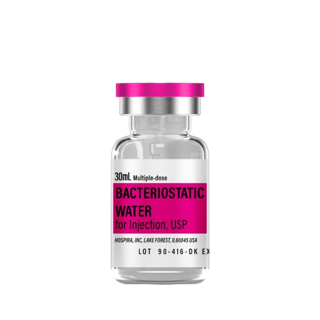
Thymogen is supplied as a lyophilized powder and is soluble in water and aqueous buffers. To reconstitute, Bacteriostatic Water or sterile water is added slowly down the inner wall of the vial so it runs onto the Thymogen powder. The vial is then gently swirled until the solution is clear. Because Thymogen is a small dipeptide it dissolves readily, but the vial should still not be shaken as a matter of good peptide handling practice.
Lyophilized Thymogen should be stored at minus 20 C, protected from light, in a sealed vial. After reconstitution, Thymogen solution should be refrigerated at 2 to 8 C, protected from light, and used within a short period. Repeated freeze thaw cycles should be avoided. The tryptophan residue in Thymogen is light sensitive, which is why protection from light is emphasized for both the powder and the reconstituted solution.
Yes. Every lot of Thymogen from Biotech Compounds is tested by an independent laboratory, and the Certificate of Analysis is available on the product page. The COA for Thymogen reports the identity and measured purity of that specific batch. Researchers should confirm the lot number printed on the Thymogen vial matches the posted COA before using it in an experiment.
Thymogen has a molecular weight of 333.34 g/mol and the molecular formula C16H19N3O5. It is a dipeptide, meaning just two amino acids, which makes Thymogen one of the smallest compounds in the Biotech Compounds catalog. The structure pairs one acidic residue, glutamic acid, with one aromatic residue, tryptophan, and that pairing is what the bioregulator research literature points to when discussing the selectivity of Thymogen.
No. Thymogen from Biotech Compounds is sold strictly as a research material for laboratory research by qualified researchers and research organizations. Purchasers must be 21 years of age or older. Thymogen sold here is not a drug or a dietary supplement, has not been approved by the FDA, and is not for human or animal consumption. It is intended only for laboratory investigation.