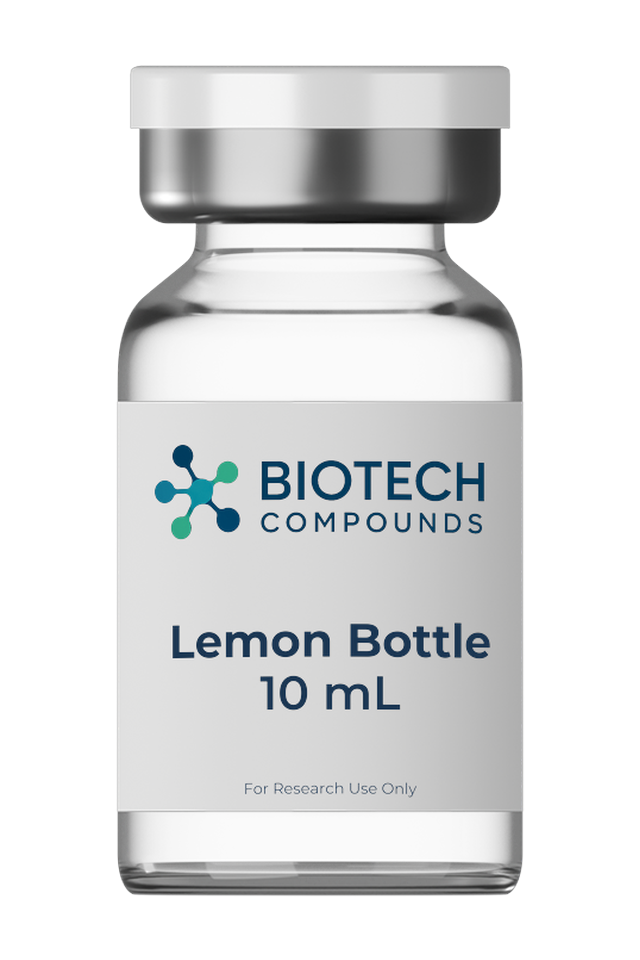

Introduction to Lemon Bottle and Targeted Fat Reduction
Lemon Bottle targeted fat reduction research centers on a high-concentration lipolytic formulation that takes a distinctly multi-mechanistic approach to adipocyte disruption. Unlike earlier-generation fat-dissolving compounds that relied primarily on phosphatidylcholine (PPC) and sodium deoxycholate as the core lytic agents, Lemon Bottle combines Riboflavin (Vitamin B2), Lecithin, and Bromelain with a suite of botanical extracts to address adipocyte metabolism, membrane integrity, and local inflammation through complementary pathways. For researchers studying localized lipolysis, adipocyte apoptosis, and fat cell biology, this formulation presents a structurally differentiated research tool.
The scientific rationale for studying targeted fat reduction at the cellular level is well established. Adipocytes in discrete depots differ from one another in receptor density, metabolic responsiveness, and sensitivity to lipolytic stimuli.[1] Understanding how a compound influences these cells locally, rather than systemically, is a meaningful area of inquiry in metabolic and adipose tissue research. Lemon Bottle is formulated specifically to address this, making it a relevant subject for laboratory investigation.
Lemon Bottle Targeted Fat Reduction: Mechanism of Action
The Lemon Bottle targeted fat reduction mechanism operates through three primary active constituents, each contributing a distinct biological action.
Riboflavin (Vitamin B2) serves as the precursor to flavin adenine dinucleotide (FAD) and flavin mononucleotide (FMN), coenzymes that are indispensable in the mitochondrial beta-oxidation of fatty acids.[2] Once adipocyte membranes are disrupted and intracellular lipids are mobilized, the metabolic fate of those liberated fatty acids depends on the availability of functional oxidative machinery. Riboflavin's role in this context is to support the downstream metabolic processing of freed lipids, providing the coenzyme infrastructure necessary for fatty acid catabolism to proceed efficiently.
Lecithin, specifically in the form of phosphatidylcholine, is a phospholipid with well-documented emulsifying properties. In the context of adipocyte research, phosphatidylcholine has been shown to intercalate into cell membranes, destabilizing the bilayer structure and compromising membrane integrity.[3] This leads to the mobilization of intracellular triglycerides, effectively making stored fat available for metabolic processing. The emulsification capacity of lecithin also facilitates the dispersion of released lipids within the aqueous extracellular environment.
Bromelain, a cysteine protease derived from the stem of Ananas comosus (pineapple), adds a proteolytic and anti-inflammatory dimension to the formulation. Research has associated bromelain with the promotion of apoptotic signaling pathways, reduction of pro-inflammatory cytokine activity, and modulation of fibrin deposition.[4] In the context of adipose tissue research, these properties are relevant because local inflammatory responses often accompany lipid mobilization, and bromelain may attenuate these responses while contributing to lipolytic activity.
The botanical complement, which includes Centella Asiatica, Salvia Miltiorrhiza root, Scutellaria Baicalensis root, and Matricaria (chamomile), provides additional anti-inflammatory and microcirculatory support. Centella Asiatica, for instance, contains triterpenoid compounds that have been studied for their effects on connective tissue remodeling and vascular function.[5] Salvia Miltiorrhiza contains tanshinones with known antioxidant and anti-inflammatory properties, while Scutellaria Baicalensis is a recognized source of baicalin, a flavonoid with broad anti-inflammatory activity.[6]
Lemon Bottle targeted fat reduction Research Findings on Adipocyte Disruption and Lipolysis
The scientific literature supporting the individual components of Lemon Bottle's targeted fat reduction profile is substantial, even if research on Lemon Bottle targeted fat reduction this specific multi-component formulation in its combined form remains an active area of investigation.
Studies on Lemon Bottle targeted fat reduction phosphatidylcholine (lecithin) as a lipolytic agent have demonstrated consistent results in cell culture and animal models. A study published in the journal Aesthetic Surgery Journal found that phosphatidylcholine induces adipocyte lysis through membrane disruption, with the extent of lysis correlating with concentration and exposure duration.[3] Importantly, the mechanism differs from detergent-based lysis; phosphatidylcholine acts as a structural competitor within the lipid bilayer rather than a simple solubilizer.
Bromelain's biological activity is supported by a considerable body of research. A review in the journal Evidence-Based Complementary and Alternative Medicine documented bromelain's capacity to modulate NF-kB signaling, reduce TNF-alpha levels, and inhibit prostaglandin synthesis, all of which contribute to its anti-inflammatory profile.[4] Separately, studies have explored bromelain's influence on adipogenesis and lipid accumulation in pre-adipocyte cell lines, suggesting it may have direct effects on fat cell development beyond its anti-inflammatory actions.
Riboflavin's centrality to fatty acid beta-oxidation is a foundational principle of biochemistry. FAD-dependent acyl-CoA dehydrogenase enzymes are rate-influencing components of the mitochondrial fatty acid oxidation pathway, and riboflavin deficiency has been shown to reduce the rate of fatty acid catabolism in multiple experimental models.[2] Including riboflavin in a lipolytic research formulation therefore addresses not just membrane disruption but also the metabolic capacity to process liberated lipids.
Key findings across the component literature include:
- Phosphatidylcholine induces concentration-dependent adipocyte lysis with a distinct membrane-intercalation mechanism[3]
- Bromelain reduces pro-inflammatory cytokines (TNF-alpha, IL-1beta) in adipose tissue models[4]
- Riboflavin deficiency measurably impairs mitochondrial beta-oxidation rates[2]
- Centella Asiatica triterpenoids support connective tissue and microvascular function in tissue remodeling studies[5]
- Baicalin from Scutellaria Baicalensis demonstrates anti-adipogenic effects in vitro[6]
Applications in Adipose Tissue and Lipolysis Lemon Bottle targeted fat reduction Research
For researchers working in adipose tissue biology, metabolic science, or formulation pharmacology, Lemon Bottle's multi-component design offers several angles of scientific inquiry relevant to Lemon Bottle targeted fat reduction studies.
One area of relevance is the study of localized lipolysis versus systemic lipid mobilization. The formulation's botanical anti-inflammatory complement raises questions about how reducing local inflammatory signaling affects the net lipolytic outcome, given that adipose tissue inflammation is now recognized as a driver of both local and systemic metabolic dysfunction.[7] Researchers can use this formulation to interrogate how anti-inflammatory co-administration modulates the cellular response to direct lipolytic agents.
A second area concerns the interplay between membrane disruption and metabolic processing. The inclusion of both a membrane-active phospholipid (lecithin) and a coenzyme precursor for oxidative metabolism (riboflavin) in the same formulation allows researchers to study whether improving downstream metabolic capacity alters the efficiency of upstream lipid mobilization. This is a nuanced question in lipid metabolism research that is not easily addressed with single-agent formulations.
Third, the exclusion of sodium deoxycholate from Lemon Bottle's formulation makes it a useful comparator in studies evaluating differential mechanisms of adipocyte disruption. Sodium deoxycholate functions as a non-specific detergent that lyses cells indiscriminately, whereas the lecithin-bromelain combination in Lemon Bottle may act with greater selectivity toward adipocytes.[3] Comparative studies using Lemon Bottle alongside deoxycholate-based agents could generate meaningful mechanistic data on selectivity and tissue response.
Potential research applications include:
- In vitro adipocyte lysis and viability assays
- Fatty acid oxidation rate measurements in cell culture following lipid mobilization
- Cytokine profiling in adipose tissue explant models treated with bromelain-containing formulations
- Comparative lipolytic efficacy studies against PPC/deoxycholate controls
- Botanical extract characterization and bioactivity screening using the formulation's plant-derived components
Formulation Composition and Lemon Bottle targeted fat reduction Research Considerations
Understanding the full ingredient profile is important for designing valid laboratory experiments. The complete composition of Lemon Bottle is: Water (Aqua), Ananas Sativus (Pineapple) Fruit Extract, Pentylene Glycol, Bromelain, Sodium Chloride, Lecithin, Centella Asiatica Extract, Salvia Miltiorrhiza Root Extract, Chamomilla Recutita (Matricaria) Extract, Scutellaria Baicalensis Root Extract, and Riboflavin (Vitamin B2).
Several points merit consideration when designing research protocols around this formulation. Pentylene Glycol serves as a solvent and preservative, and its concentration should be factored into solvent control design for in vitro assays. Sodium chloride contributes to osmolarity, which is relevant when applying the formulation to cell culture systems with defined osmolarity requirements. Researchers should establish appropriate vehicle controls to isolate the effects of Lemon Bottle targeted fat reduction the bioactive constituents from solvent or osmotic contributions.
Bromelain is a protease, which means it may interfere with protein-based assay readouts if not accounted for in experimental design. Enzyme activity quenching steps or protease inhibitor cocktails may be necessary in certain assay formats. Additionally, because riboflavin is photosensitive, storage and handling conditions should minimize light exposure to preserve enzymatic coenzyme activity.
The botanical extracts introduce phenolic and flavonoid compounds that can interact with oxidative assay systems, such as DPPH or TBARS assays, requiring careful interpretation of results that involve antioxidant endpoints. Researchers working with this formulation for the first time should conduct pilot characterization experiments before committing to high-throughput screening workflows.
Lemon Bottle is intended strictly for laboratory and in vitro research use. It is not for human or animal administration, and all research applications should comply with institutional biosafety and ethical guidelines.
Lemon Bottle targeted fat reduction Conclusion
Lemon Bottle targeted fat reduction research represents a scientifically coherent area of inquiry built on three mechanistically distinct active components, each supported by an established body of literature. The combination of lecithin's membrane-disruptive emulsification, riboflavin's coenzyme support for fatty acid oxidation, and bromelain's proteolytic and anti-inflammatory activity creates a formulation that addresses adipocyte biology at multiple levels simultaneously. The botanical extracts further extend the formulation's potential utility in studies examining the intersection of inflammation, microcirculation, and localized lipid metabolism.
For researchers investigating adipose tissue biology, lipolytic mechanisms, or formulation-based approaches to targeted fat reduction, Lemon Bottle targeted fat reduction offers a differentiated and multi-mechanistic research platform. To review the full product specifications and composition details, explore Lemon Bottle at Biotech Compounds. Learn more about Lemon Bottle research.
References
- Tchernof A, Despres JP. Pathophysiology of human visceral obesity: an update. Physiological Reviews. 2013;93(1):359-404.
- Powers HJ. Riboflavin (vitamin B2) and health. American Journal of Clinical Nutrition. 2003;77(6):1352-1360.
- Rotunda AM, Kolodney MS. Mesotherapy and phosphatidylcholine injections: historical clarification and review. Dermatologic Surgery. 2006;32(4):465-480.
- Rathnavelu V, et al. Potential role of bromelain in clinical and therapeutic applications. Biomedical Reports. 2016;5(3):283-288.
- Brinkhaus B, et al. Chemical, pharmacological and clinical profile of the East Asian medical plant Centella asiatica. Phytomedicine. 2000;7(5):427-448.
- Yoon SB, et al. Anti-inflammatory effects of Scutellaria baicalensis water extract on LPS-activated RAW 264.7 macrophages. Journal of Ethnopharmacology. 2009;125(2):286-290.
- Weisberg SP, et al. Obesity is associated with macrophage accumulation in adipose tissue. Journal of Clinical Investigation. 2003;112(12):1796-1808.