
Introduction
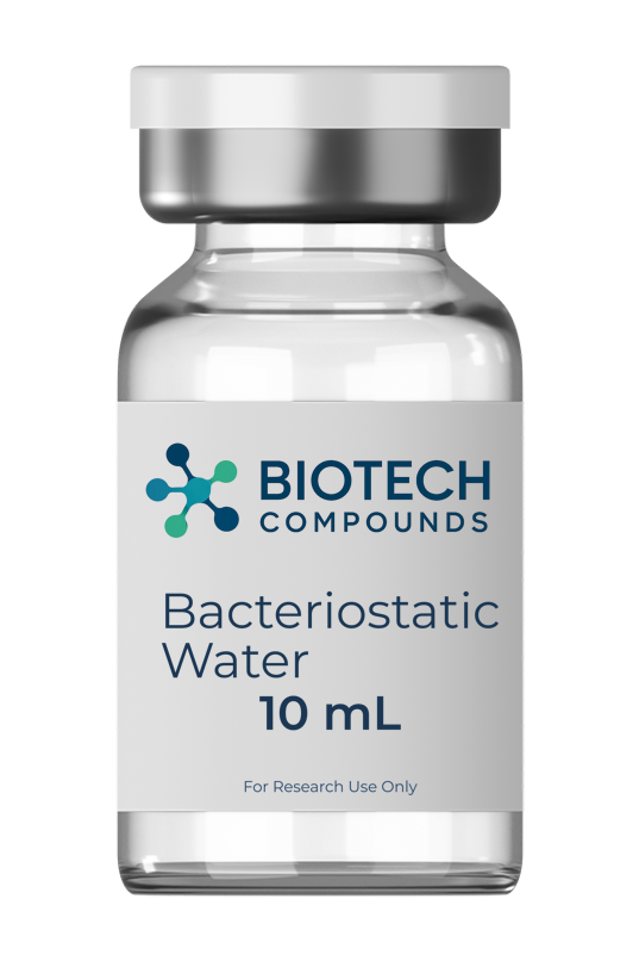
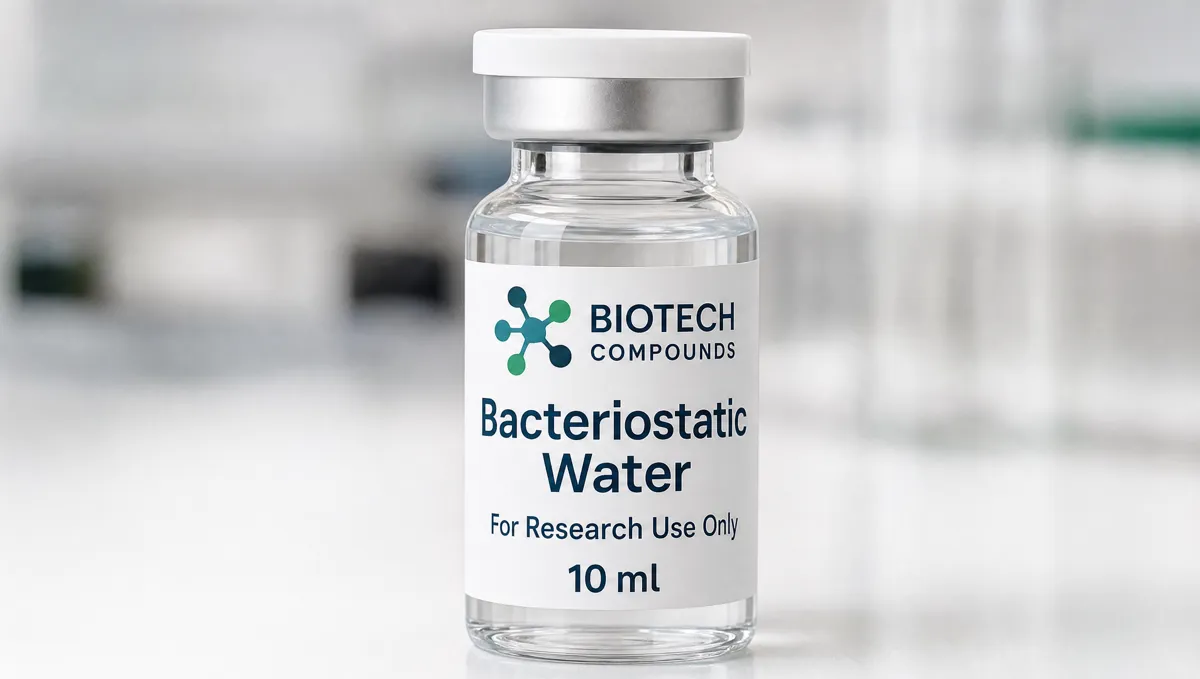
Researchers working with lyophilized peptides face a recurring practical problem: how to dissolve a freeze-dried compound into a usable solution without compromising sterility or peptide stability across repeated use. This is where Bacteriostatic Water becomes indispensable. Bacteriostatic Water is sterile, USP-grade water containing 0.9% benzyl alcohol as a preservative, and it is specifically formulated to allow multiple withdrawals from a single vial over an extended period. For laboratories running peptide studies that require repeated dosing schedules or multi-day protocols, Bacteriostatic Water offers a practical, standardized solution that plain sterile water cannot match.
In this article, we examine why Bacteriostatic Water has become the standard diluent choice among researchers testing peptides, how its mechanism of action supports extended vial life, and what considerations matter most when incorporating it into a laboratory workflow.
Bacteriostatic Water Mechanism of Action for Peptide Research
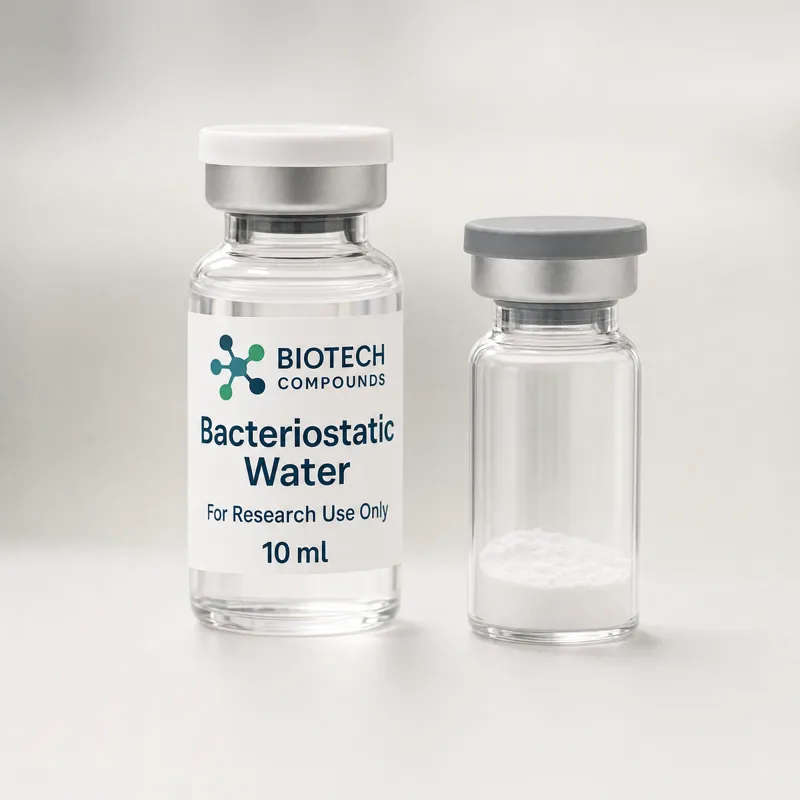
Bacteriostatic Water works through a straightforward but effective chemical mechanism. The 0.9% benzyl alcohol concentration (approximately 9 mg/mL) acts as an antimicrobial agent that inhibits the growth of bacteria and other microorganisms that might otherwise contaminate a vial after the rubber septum is punctured multiple times. Unlike sterile water for injection, which is designed for single-use applications and must be discarded immediately after opening, Bacteriostatic Water maintains its antimicrobial properties for up to 28 days once opened, provided it is stored properly at room temperature between 20-25°C.
For researchers reconstituting peptides, this extended usability window matters significantly. Many peptide research protocols require repeated sampling from the same vial over days or weeks. Using Bacteriostatic Water instead of standard sterile water reduces the risk of microbial contamination with each needle insertion, since the benzyl alcohol continuously suppresses bacterial proliferation between uses. This is fundamentally different from a one-time dilution event; it is an ongoing protective mechanism that supports the integrity of the reconstituted peptide solution throughout the research timeline.
Additionally, Bacteriostatic Water is isotonic and maintains a neutral pH, which minimizes the risk of denaturing sensitive peptide structures during the reconstitution process. Peptides can be fragile molecules, and introducing a diluent with an inappropriate pH or osmotic pressure can degrade Bacteriostatic Water for peptides before meaningful research data can be collected. Bacteriostatic Water's formulation avoids these pitfalls while still delivering the antimicrobial benefit researchers need for multi-use vials.
Research Findings on Bacteriostatic Water and Peptide Stability
Peer-reviewed literature and pharmacopeial standards support the use of benzyl alcohol-preserved water for multi-dose applications. Benzyl alcohol has long been recognized as an effective preservative in parenteral formulations, with studies demonstrating its bacteriostatic activity against common contaminant organisms such as Staphylococcus aureus and Escherichia coli [1]. The United States Pharmacopeia (USP) monograph for Bacteriostatic Water for Injection specifies the 0.9% benzyl alcohol concentration precisely because this level provides adequate antimicrobial protection without introducing excessive cytotoxicity to the solution [2].
Research on Bacteriostatic Water for peptides peptide stability in reconstituted solutions further supports why the diluent choice matters. Studies examining peptide degradation kinetics have shown that pH, temperature, and microbial contamination are among the primary factors affecting peptide half-life once reconstituted [3]. Because Bacteriostatic Water is formulated to be isotonic and pH-neutral, it reduces one of these degradation variables compared to diluents that may carry an unstable pH profile.
It is also worth noting that laboratories following standardized reconstitution protocols report more consistent peptide solubility outcomes when using Bacteriostatic Water rather than improvised diluents. Consistency in dilution practices matters for reproducibility, a cornerstone of sound laboratory methodology. When researchers use Bacteriostatic Water as a controlled variable across experiments, they reduce confounding factors that might otherwise obscure the true effects being studied.
Applications of Bacteriostatic Water in Peptide Reconstitution
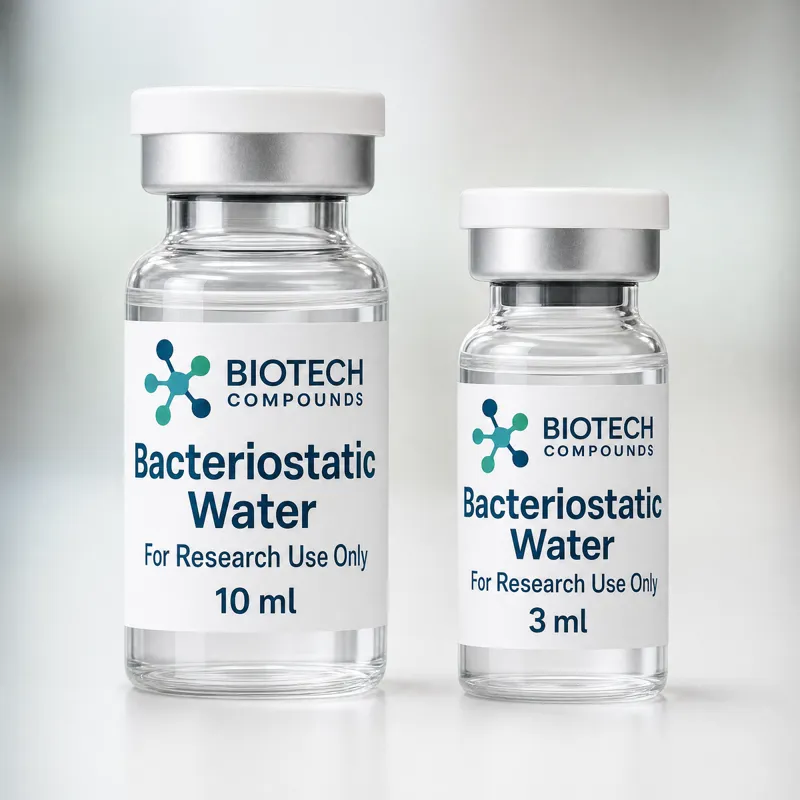
The primary application researchers rely on Bacteriostatic Water for is the reconstitution of lyophilized (freeze-dried) peptides prior to laboratory study. Below are common scenarios where this diluent proves particularly valuable:
- Multi-dose research protocols: Studies requiring repeated withdrawals from a single vial over days or weeks benefit from the extended 28-day usability window Bacteriostatic Water provides.
- Precision dilution calculations: Because Bacteriostatic Water has a known, consistent composition, researchers can calculate exact concentration ratios (mg/mL) for their reconstituted peptide solutions with confidence.
- Reducing contamination risk: Each vial puncture introduces a small risk of microbial exposure. The benzyl alcohol content actively works to suppress any introduced organisms between uses.
- Standardization across research teams: Using a pharmacopeial-grade, well-documented diluent like Bacteriostatic Water allows multiple researchers or labs to replicate reconstitution steps consistently.
- Storage convenience: Bacteriostatic Water can remain at room temperature, simplifying laboratory storage logistics compared to diluents requiring refrigeration.
Researchers exploring peptide behavior, receptor binding assays, or in vitro cell culture applications often cite the practicality of Bacteriostatic Water for peptides as a key reason they standardize its use in their protocols. Because it supports multiple draws from a single vial, it also reduces material waste compared to single-use sterile water preparations that must be discarded after one entry.
Considerations When Using Bacteriostatic Water for Peptide Research
While Bacteriostatic Water offers clear advantages, researchers should keep several considerations in mind to ensure proper use:
- 28-day discard rule: Even with benzyl alcohol's antimicrobial properties, Bacteriostatic Water should be discarded 28 days after first use. Extending beyond this window increases contamination risk regardless of preservative content.
- Benzyl alcohol sensitivity: Some peptide compounds or research applications may be sensitive to benzyl alcohol. Researchers should review compound-specific literature before assuming compatibility.
- Not for all reconstitution needs: Certain sensitive research applications may call for preservative-free sterile water instead, particularly in single-use, short-duration experiments.
- Proper storage: Bacteriostatic Water should be stored at room temperature (20-25°C) and protected from light when possible to preserve its stability.
- Laboratory use only: Bacteriostatic Water sold for research purposes is explicitly labeled for laboratory use only and is not intended for human consumption or clinical application.
Researchers should also document reconstitution dates, dilution volumes, and vial handling procedures thoroughly. This recordkeeping supports reproducibility and allows research teams to track whether any observed variability in results correlates with diluent age or handling inconsistencies.
Conclusion
Bacteriostatic Water has become a foundational tool in peptide research settings because it directly addresses two persistent challenges: microbial contamination risk across repeated vial access, and the need for a stable, isotonic, pH-neutral diluent that supports peptide integrity. Its 0.9% benzyl alcohol formulation, extended 28-day usability window, and pharmacopeial-grade consistency make it a practical choice for laboratories running multi-dose or extended research protocols. Researchers who prioritize reproducibility and sample integrity in their peptide work consistently turn to Bacteriostatic Water as their diluent of choice. To learn more about sourcing high-quality Bacteriostatic Water for your laboratory needs, explore Bacteriostatic Water available for research applications. Learn more about Bacteriostatic Water research.
References
- Li M, et al. Molecular Mechanism of Antimicrobial Excipient-Induced Aggregation in Parenteral Formulations of Peptide Therapeutics. Molecular Pharmaceutics. 2022. PMID 35917158
- Nugrahadi PP, et al. Designing Formulation Strategies for Enhanced Stability of Therapeutic Peptides in Aqueous Solutions: A Review. Pharmaceutics. 2023. PMID 36986796
- Yoshizawa S, et al. Trimethylamine N-oxide (TMAO) is a counteracting solute of benzyl alcohol for multi-dose formulation of immunoglobulin. International Journal of Biological Macromolecules. 2018. PMID 28939518
- Gupta S, Kaisheva E. Development of a multidose formulation for a humanized monoclonal antibody using experimental design techniques. AAPS PharmSci. 2003. PMID 12866935
- Zupančič O, et al. Storage Stability of Bivalirudin: Hydrophilic Versus Lipophilic Solutions. Journal of Pharmaceutical Sciences. 2017. PMID 28137696