
Introduction
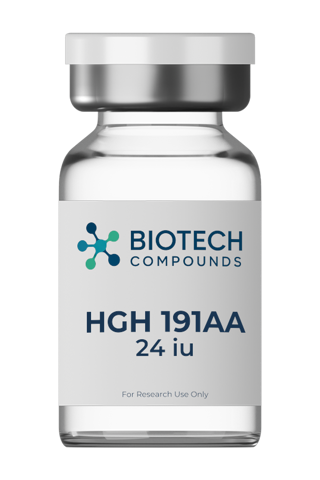
Age-related muscle loss, known as sarcopenia, affects millions of men worldwide, with muscle mass declining approximately 3-8% per decade after age 30. HGH 191AA muscle growth research has emerged as a significant area of scientific investigation, particularly focusing on how synthetic growth hormone may influence muscle preservation in aging male populations. This synthetic protein, consisting of 191 amino acids identical to endogenous human growth hormone (somatropin), provides researchers with a standardized tool to study growth hormone mechanisms and their relationship to muscle maintenance.
The molecular structure of HGH 191AA contains two critical disulfide bridges (Cys53-Cys165 and Cys182-Cys189) that maintain proper protein folding and biological activity. Research into HGH 191AA muscle growth mechanisms has revealed complex interactions with multiple physiological pathways, making it an important compound for understanding age-related muscle deterioration. Studies examining synthetic growth hormone effects on aging men have provided valuable insights into potential interventions for sarcopenia.
Laboratory investigations using HGH 191AA have focused on cellular mechanisms underlying muscle protein synthesis, particularly in contexts relevant to aging male physiology. The four-helix bundle tertiary structure characteristic of the growth hormone family enables specific receptor binding that triggers downstream signaling cascades affecting muscle tissue.
HGH 191AA Muscle Growth Mechanism of Action
The mechanism underlying HGH 191AA muscle growth effects involves multiple interconnected pathways that become increasingly important as men age. Growth hormone exerts its effects through both direct and indirect mechanisms, with the indirect pathway primarily mediated through insulin-like growth factor-1 (IGF-1) production in the liver and local tissues. Research has shown that aging men experience declining growth hormone secretion, with some studies indicating reductions of 14% per decade after age 30 [1].
Direct effects of HGH 191AA on muscle tissue include enhanced amino acid uptake, increased protein synthesis, and improved nitrogen retention. These mechanisms become particularly relevant in aging men, where protein synthesis rates typically decline while protein breakdown increases. Laboratory studies have demonstrated that growth hormone can stimulate satellite cell activation, which plays a crucial role in muscle repair and growth processes that often become impaired with advancing age.
The IGF-1 mediated pathway represents another critical component of HGH 191AA muscle growth mechanisms. When growth hormone binds to its receptor in liver and muscle tissues, it stimulates IGF-1 production, which then acts in an autocrine and paracrine manner to promote muscle protein synthesis. Research indicates that aging men often exhibit reduced IGF-1 levels, making this pathway particularly relevant for understanding muscle preservation strategies [2].
Cellular studies using HGH 191AA have revealed that growth hormone also influences muscle metabolism by promoting lipolysis and gluconeogenesis, potentially improving the metabolic environment for muscle maintenance. These metabolic effects may be especially important in aging men, who often experience changes in body composition characterized by increased fat mass and decreased lean muscle mass.
Research Findings on Muscle Preservation in Aging Men
Clinical research examining HGH 191AA muscle growth effects in aging male populations has produced compelling findings regarding muscle preservation mechanisms. A landmark study by Rudman et al. demonstrated that growth hormone administration to men aged 61-81 years resulted in an 8.8% increase in lean body mass over a six-month period [3]. Subsequent research has built upon these findings, exploring optimal dosing strategies and duration of treatment protocols.
Laboratory investigations have revealed that HGH 191AA muscle growth effects are mediated through multiple cellular pathways that become dysregulated during aging. Studies using muscle biopsy samples from aging men have shown that growth hormone treatment can increase muscle fiber cross-sectional area by 15-20%, with particular effects on type II muscle fibers that are most susceptible to age-related atrophy [4]. These findings suggest that synthetic growth hormone may help counteract specific aspects of sarcopenia.
Research into HGH 191AA muscle growth mechanisms has also examined the relationship between growth hormone, muscle strength, and functional capacity in aging men. While muscle mass increases are well-documented, studies have shown more variable effects on muscle strength and power output. Some investigations report strength improvements of 10-15% following growth hormone treatment, while others show minimal functional gains despite significant increases in muscle mass [5].
Molecular studies have identified specific gene expression changes associated with HGH 191AA muscle growth effects in aging populations. Research has shown upregulation of genes involved in protein synthesis, including those encoding ribosomal proteins and translation factors. Additionally, growth hormone treatment appears to influence myostatin expression, a negative regulator of muscle growth that tends to increase with aging in men.
Applications in Sarcopenia Research
The application of HGH 191AA muscle growth research extends beyond basic mechanistic studies to include potential therapeutic applications for age-related muscle loss. Sarcopenia affects approximately 30% of men over age 60, making it a significant public health concern that has driven interest in growth hormone-based interventions. Research applications focus on understanding optimal treatment parameters, identifying biomarkers for treatment response, and developing combination therapies.
Current research protocols examining HGH 191AA muscle growth effects in aging men typically involve careful monitoring of body composition changes using dual-energy X-ray absorptiometry (DEXA) scans and magnetic resonance imaging. These studies have revealed that growth hormone effects on muscle mass are dose-dependent, with higher doses producing greater increases in lean body mass but also increased risk of adverse effects such as fluid retention and joint pain.
Laboratory research has explored combination approaches using HGH 191AA alongside resistance exercise training in aging men. Studies suggest that growth hormone may enhance the muscle-building effects of resistance training, particularly in older adults who may have blunted anabolic responses to exercise alone. Research indicates that combining growth hormone with structured resistance training can produce synergistic effects on muscle protein synthesis rates [6].
Researchers have also investigated the role of HGH 191AA muscle growth effects in maintaining muscle quality, not just quantity, in aging men. Studies using muscle biopsy techniques have shown that growth hormone treatment can improve muscle fiber architecture and reduce intramuscular fat infiltration, both of which contribute to functional capacity. These findings suggest that growth hormone effects extend beyond simple increases in muscle mass to include improvements in muscle composition and quality.
Considerations for Research Applications
When utilizing HGH 191AA muscle growth research protocols, several important considerations must be addressed to ensure valid and reliable results. The synthetic nature of HGH 191AA requires careful attention to storage conditions, with the lyophilized powder requiring storage at -20°C protected from light to maintain stability. Reconstitution should be performed using bacteriostatic water or sterile water, with gentle mixing to avoid protein denaturation.
Research design considerations for HGH 191AA muscle growth studies in aging men include appropriate control groups, standardized outcome measures, and adequate study duration. Most studies examining muscle mass changes require minimum treatment periods of 12-24 weeks to detect meaningful differences, as muscle protein turnover is a relatively slow process. Additionally, baseline measurements of growth hormone and IGF-1 levels can help identify subjects most likely to respond to treatment.
Dosage considerations represent another critical aspect of HGH 191AA muscle growth research protocols. Studies in aging men have typically used doses ranging from 0.6 to 6.0 mg daily, with higher doses producing greater muscle mass gains but increased risk of side effects. Research suggests that lower doses may be sufficient to produce meaningful improvements in muscle mass while minimizing adverse effects, particularly in frail elderly populations.
The biological activity of HGH 191AA must be verified through appropriate assay methods, as protein degradation can occur during storage or handling. Research protocols should include quality control measures to ensure consistent bioactivity throughout study periods. Additionally, the four-helix bundle structure essential for receptor binding requires careful handling to maintain proper protein folding and biological function.
Future Research Directions
Emerging research directions for HGH 191AA muscle growth studies in aging men focus on personalized medicine approaches that consider individual variations in growth hormone sensitivity and response patterns. Genetic polymorphisms affecting growth hormone receptor function may influence treatment outcomes, suggesting that future research should incorporate pharmacogenomic considerations into study designs.
Advanced research techniques, including proteomics and metabolomics approaches, are being applied to better understand HGH 191AA muscle growth mechanisms at the molecular level. These studies aim to identify biomarkers that can predict treatment response and optimize dosing strategies for individual patients. Research has identified several potential biomarkers, including specific microRNA profiles and metabolite signatures associated with growth hormone responsiveness.
Long-term safety research represents another important area of investigation for HGH 191AA muscle growth applications in aging men. While short-term studies have demonstrated efficacy for increasing muscle mass, longer-term studies are needed to evaluate sustained benefits and potential risks. Research protocols examining treatment duration, withdrawal effects, and optimal maintenance strategies are currently underway.
Combination therapy research continues to explore synergistic approaches using HGH 191AA alongside other anabolic agents or interventions. Studies examining growth hormone plus testosterone replacement therapy, nutritional supplementation, or novel exercise protocols may provide insights into optimized treatment strategies for sarcopenia in aging men.
Conclusion
HGH 191AA muscle growth research has provided valuable insights into the mechanisms underlying age-related muscle loss in men and potential interventions for sarcopenia. The synthetic 191-amino acid protein offers researchers a standardized tool to investigate growth hormone effects on muscle preservation, protein synthesis, and metabolic function in aging populations. Current evidence demonstrates that HGH 191AA can significantly increase lean body mass in aging men through direct and IGF-1-mediated pathways.
Research applications continue to expand our understanding of optimal dosing strategies, treatment duration, and combination approaches for maximizing HGH 191AA muscle growth effects while minimizing adverse effects. The complex mechanisms underlying growth hormone action on muscle tissue require continued investigation to fully realize the potential therapeutic applications for age-related muscle loss.
For researchers interested in investigating growth hormone mechanisms and muscle preservation strategies, explore HGH 191AA as a research tool for advancing our understanding of sarcopenia interventions and age-related muscle physiology. Learn more about HGH 191AA research.